ANAM: The First 30 Years, Pt 1 (1996-2008)
Proceed to pt 2 (2009-2026)
Good old Sydney-Melbourne rivalry.
Sometimes it actually produces good things. A national music academy, for example. Because when Paul Keating, our Mahler-loving, Sydney-centric Prime Minister delivered his ambitious Creative Nation statement in October 1994, promising an extra $7.5 million for the Sydney Symphony Orchestra, political optics demanded that something of similar value be given to Melbourne. But what?
The solution came from John Painter, Director of the Canberra School of Music. For some time Painter had been lobbying Keating to look into establishing a new classical music performance academy which would match Juilliard and the Curtis Institute in quality, giving young Australian musicians the same level of ‘world-class’ (sigh) training. Painter had already done his homework and prepared a blueprint, naturally assuming that the new academy would be located in Canberra. So, without any particular sympathy for cultural institutions outside Sydney or Canberra, he must have been blindsided, and a little put out, when Keating announced, “The Academy will be situated in Melbourne”. From its birth, the institution was something of a political construct, solving a niggling problem for those occupying the Lodge. This lack of strategic or educational heft plagued the Academy for the first fifteen years of its life, making for a fascinating case study.
Of course, issuing a fiat is the easy bit. Making it a reality proved infinitely harder. Keating’s statement offered no clues as to how the National Academy of Music, as it was first called, would operate, how many students it would take, how long they would stay, nor indeed a tangible role or objective for the institution. Despite Painter’s preparatory work the whole project ended up being handballed to the University of Melbourne, where Creative Nation had specified it would draw on the facilities and administrative resources of the University’s Conservatorium and Victorian College of the Arts. The Vice-Chancellor, David Penington, a passionate supporter of music and the fine arts and a subsequent generous donor, then asked the head of the Conservatorium, Professor Warren Bebbington, to develop the concept. Also willingly assigned to the project was the University’s Deputy Vice-Chancellor (Resources), Professor Barry Sheehan, whose notes from the period identified that the NAM urgently needed a home, an artistic director and a teaching model.
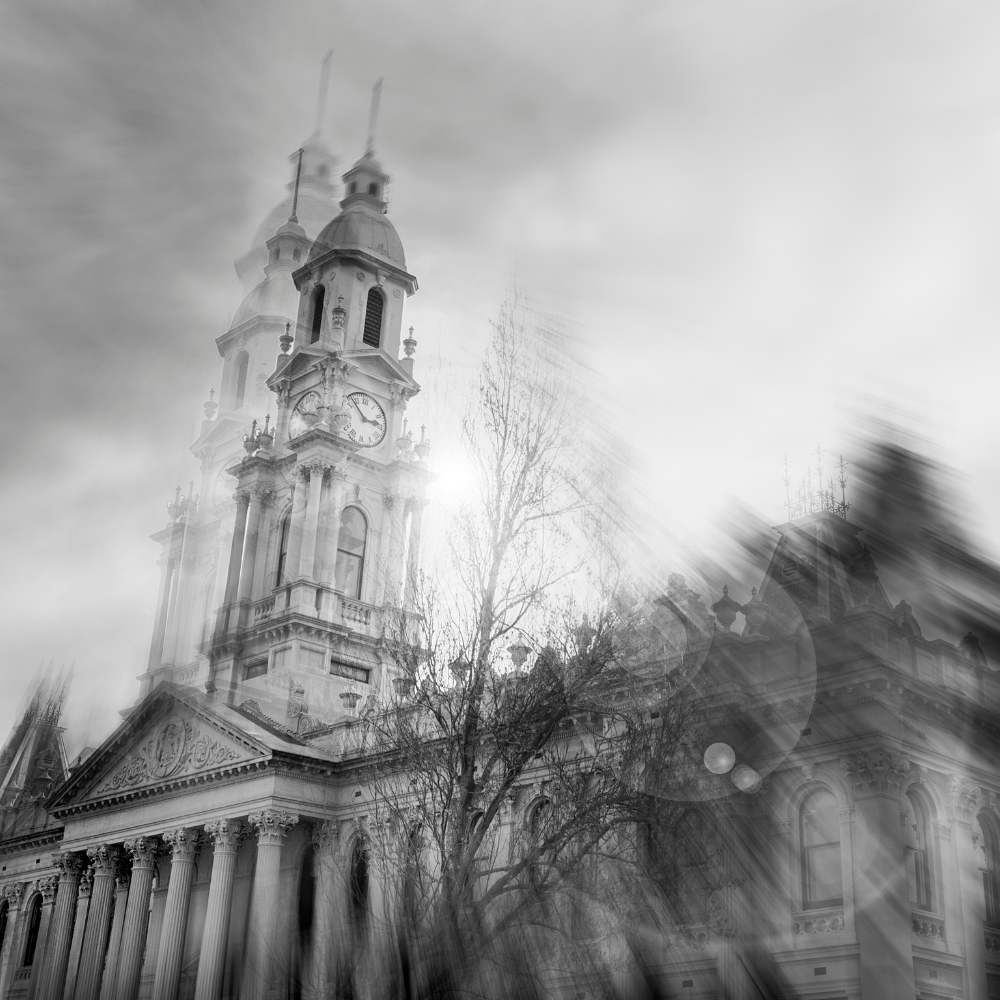
As for the first of these, Keating’s offer to locate the thing in Victoria had been conditional on the Victorian Government providing the NAM with an appropriate home. “The Commonwealth will provide operational funding, the State must ensure its ongoing security of accommodation”, the draft MoU outlined. David Penington’s advocacy with the then Coalition Victorian Government was significant. Jeff Kennett, then Premier, had recently forced the amalgamation of 210 local councils down to 78, and thus had a few spare town halls lying around; would one of those do? After numerous near-derelict buildings were inspected and rejected, the South Melbourne Town Hall emerged as the best candidate. It was close to the arts precinct, which the Victorian government was promoting, had good access to public transport, had lots of rooms that could be refitted as studios and was sitting empty, the new Council’s admin now centralised in St Kilda Town Hall.
There was only one problem. Kennett’s sacking of the South Melbourne Council had so infuriated the local community that his ‘gifting’ of their town hall was felt as yet another slap in the face – and this hot on the heels of seizing the same community’s Albert Park to hold a car race! - and they weren’t going to take it lying down. They had a legitimate grievance: South Melbourne’s town hall was the only one in Victoria built not on Crown Land, but on land bought by the earliest ratepayers, meaning that Kennett had no moral right to give it away. Julie Johnson, a former South Melbourne Councillor, rallied the anti-Academy troops in an angry letter to The Age, fuming that the Academy’s occupation of the Town Hall amounted to a “theft from the local community.” Of course, no one seemed to be much interested in talking about a much earlier theft: one might suggest that the Town Hall sat not on the land of the good citizens of South Melbourne, but on the lands of the Yaluk-ut Weelam clan of the East Kulin nation. Neither were the troops much interested in talking about how the now empty building might be maintained or what possible use it might serve: a “museum for local government’ was the thought-bubble doing the rounds (now the day of that particular school excursion would be a good one for playing hooky!). The Academy was finally granted a twenty-year lease by the new City of Port Phillip’s transitional Administrator, but the protestors proved very good at maintaining the rage, and the whole messy business would continue to give the Board grief for at least the next fifteen years.
While the Town Hall was being modified, Bebbington recruited Fiona Allan, whose work at Youth Music Australia had impressed him, to be the founding Artistic Administrator/ General Manager, and together they arranged the Academy’s first program at the University’s Melba Hall.
Sir Zelman Cowen (ANAM Chair, 1995-2001)
The choice of first Chair appears to have been unanimous, at least as far as Bebbington, Sheehan and David Penington were concerned: they all wanted Sir Zelman Cowan, a widely respected former Governor General and music lover. According to Sheehan’s notes, Sir Zelman took some persuading even though he could see the benefits of the project. But after graciously accepting the role, Sir Zelman soon discovered the ‘chair’ had splinters. It's unlikely, for instance, that he foresaw his tasks would include facing angry South Melbourne residents at public meetings. Not even the considerable diplomatic talents of Sir Zelman could quell their rage.
More discontent came from the National Council of Heads of Tertiary Music Schools (NACHTMUS). As Bebbington explains, “You might have expected the leaders of the nation’s conservatoriums would welcome the government funding of a venture aimed at raising the country’s most gifted music students and the orchestras to international standards; instead, they saw Keating’s concept as competing with their own institutions and unreasonably favouring the University of Melbourne.” Bebbington even arranged for Sir Zelman - who by now must occasionally have wondered what sort of lion’s den he’d walked into - to meet with NACHTMUS, where he was lectured at length, without much cooperation being agreed.
By May 1995 the NAM was able to conduct its first Board meeting. Members included leading Australian musicians, academics and administrators, including John Painter, who graciously gave his time and talents to the new Board despite having lost out to Melbourne. One of the biggest questions the Board had to settle over the ensuing months was what sort of teaching model the NAM would adopt. By December they had narrowed the options down to two:
(1) 40 full-time ‘elite’ students – that pesky ‘e’ word would come to exercise the minds of many in the coming decade - drawn from across the country, based in South Melbourne, with faculty drawn mostly from the University of Melbourne, Victorian College of the Arts and visiting international artists, offering a Graduate Diploma in Performance; or
(2) a schedule of intensive short-term courses held across the country, involving teachers from all Australia’s institutions, with all Melbourne activities to take place in South Melbourne Town Hall, and no diplomas or certificates.
At this early stage the Board overwhelmingly supported the short courses option. It’s not hard to see why. Bebbington had reported that NACHTMUS would view a full-time program as directly competing with the established schools, and could even force the resignation of some Board members. But for the time being, the Board wanted short, non-awards courses (meaning no diplomas or degrees), and performance excellence to remain the primary goal and measure of success. The NAM was tentatively finding its feet but, as Barry Sheehan noted, it was hard to finalise any further plans without an Artistic Director.
In July 1995 there was another important development: the NAM became the ANAM - the Australian National Academy of Music. (Was it Aussie pride that served up this tautology, or did someone finally twig that ‘nam’ had unwelcome connotations?)
ON THE ROAD
In 1996 the curtain was ready to go up on the new ANAM. In March, the first auditions were held, and over 100 gifted instrumentalists and singers between the ages of 11 and 30 were selected to participate in one of eight intensive courses held in state capitals, the whole gruelling roadshow managed by Fiona Allan. A two-week piano intensive was held at the University of Melbourne, tutored by Ronald Farren-Price, Michael Kieran Harvey, Piers Lane and John Lill - not a bad line-up - and the young secondary school-aged pianists included future stars such as Andrea Lam. The Herald-Sun, not usually noted for its arts coverage, raved about the culminating performances. Next, a program in Sydney for 30 young wind players was hosted by Gary Schocker, a flute Professor from Juilliard, who was pleased to find a level of talent and enthusiasm superior to back home. Then string players had a turn when five members of the Berlin Philharmonic, including that orchestra’s only Australian member, violist Brett Dean, arrived to impart their skills. Dame Joan Sutherland led a voice program. Our finest young musicians finally had the world coming to them, rather than the other way around, and ANAM was offering tuition of an international standard, albeit in short doses. Crowning the year was the appointment, in November, of Trevor Green as ANAM’s first official Artistic Director.
Trevor Green (ANAM Artistic Director, 1996-1998)
Green came to Melbourne from Manchester, where he had been running the BBC’s music program in Northern England. He must have really wanted the job, as his three-year contract only budgeted for two economy-class tickets from the UK. But his initial enthusiasm didn’t last, and after only two years Green left ANAM to run the Melbourne Symphony Orchestra. Valiant Ron Farren-Price held the fort while the Board scrambled to find Green’s successor, but Green’s early departure proved to be a recurring problem. The next two Directors, pianist Frank Wibaut and violinist John Harding, both departed before the conclusion of their contracted terms, with the result that ANAM had difficulty establishing a clear path. While each of ANAM’s first three Directors represented the highest artistic standards, none stayed long enough to consolidate a unique culture.
In 1999 the Board made a radical change of direction, dropping the nation-wide short courses in favour of a full-time program at the Town Hall. The short courses, though successful, had consumed huge resources, requiring hundreds of airfares plus accommodation costs, not just for the musicians but also, in the case of younger participants, their chaperones. The new Advanced Performance Program took place entirely in the Town Hall and offered 36 weeks of intense tuition, masterclasses and concerts split into four terms across the year, resembling the structure of today’s ANAM program. But this move came at a cost. It undoubtedly weakened ANAM’s national exposure and raised the eyebrows – and ire - of conservatory schools across the country, as Warren Bebbington’s warning had foretold.
In the early 2000’s there was also a growing perception in some quarters – including, worryingly, in Canberra - that ANAM was too costly for what it was producing, and its musicians too privileged: focusing on producing ‘international soloists’ was perhaps not something that the country could afford. Even long-suffering John Painter began to lose faith. Something, clearly, had gone wrong.
VIOLIST, COMPOSER, CONDUCTOR
John Harding’s early departure left ANAM once again director-less, and while administrator David Barmby put together a program for the 2005 cohort, it had become obvious that the Academy needed a leader with a vision who would stick around, and whose priority was ANAM’s young musicians. The Board must have breathed a collective sigh of relief when composer and violist Brett Dean accepted the role. His credentials were unassailable: fourteen years with the Berlin Philharmonic, a solo career, and a growing reputation as one of the world’s most admired composers. He was a Brisbane boy who’d made good on the world stage and was an ideal role model for aspiring Australian musicians.
As he settled in, Dean began to feel that ANAM was too concerned with an outmoded culture of grooming future soloists rather than producing well-rounded musicians. “As an institution,” he says, “it didn’t seem to burn with curiosity or to be stretching its collective sense of imagination. It tended to follow well-trodden, rather Euro-centric paths…It wasn’t imparting the sense of ‘what-if’ about futures in music in the way that I felt it could and should.” The remedy, he decided, was more chamber and orchestral playing, and a widening of the historical parameters to program more works outside the Classical-Romantic domain. “No one’s here for a haircut”, he was often heard to say, programming more ensemble and contemporary works. At times he felt like he was ‘pushing stuff uphill’, as his ideas had irritated some faculty members and musicians who regarded chamber music as interfering with preparation for competitions. But Dean stuck to his vision, holding that even gifted soloists needed “more exposure to the act of making music with others, and at the highest level.” Under Dean’s leadership, the musicians gained a much wider variety of experience, and ANAM became one of Australia’s leading venues of chamber and contemporary music.
Brett Dean (ANAM Artistic Director, 2006-2010)
2007 and 2008 were good years for ANAM. Dean’s energy and his superlative musicianship experienced in performances alongside his ‘young colleagues’ motivated them as they’d never been motivated before. Crowds began to grow. Nick Bailey, the new Artistic Administrator, fresh from programming one of Australia’s symphony orchestras, was totally supportive of Dean’s aspirations, and the pair proved a dynamic duo. Bailey had arrived mid-2007 to find only a sketchy program of ‘TBC’s for 2008. His imaginative scheduling, connections with the international artists’ agents and the professional sector, and technical facility in program-making put a bomb under the place. He also created events which were visually as well as aurally memorable, including the Messiaen in the Cathedral festival, which included ANAM’s pianists performing on eight Steinways dispersed throughout St Patrick’s Cathedral at midnight, spectacularly lit via 20 illuminated helium-filled weather balloons. In addition to the extra concerts, Dean instituted Fridays@3, a weekly public lecture series following the Friday lunchtime recital, where visiting guests – from Don Watson to Vladimir Ashkenazy - talked on a wide range of topics. The Town Hall was buzzing. It felt like the organisation had the wind in its sails for the first time, indeed was starting to fly.
When Kevin “07” Rudd won the federal election for the ALP, ANAM’s future looked rosy. Because Labor governments are always supportive of the arts, aren’t they? Sadly, not always.
FAX DAY
Politics, like the bad fairy in Sleeping Beauty, had been present at ANAM’s birth and in August 2008 politics returned to spoil the show. Despite ANAM’s burgeoning organisational momentum, replete with new initiatives, personalities, programs and activities, the misgivings from the early 2000’s had taken hold amongst the Canberra bureaucracy. And the bureaucrats, slow to catch on to the rapidly changing ANAM world down in Melbourne (clearly a failure of ANAM’s reporting processes) had the ear of the new inexperienced Minister. A letter arrived for John Haddad, ANAM’s then Chairman, from Peter Garrett, the new Minister for the Arts, outlining nine conditions which had to be met. (Ominously, no consequences were noted for failing to meet these conditions.) Garrett wanted an amended bursary policy, a review of ANAM’s constitution, a plan for course certification, more income from sponsorship and less from government, and so on. His demands were not at all unreasonable - these were taxpayers’ funds, after all - but the timeframe was: ten weeks for ANAM’s Board to meet all nine conditions. No Board, with the best will in the world, could address so many issues in so little time. ANAM was clearly being set up to fail.
On October 3, Haddad replied to the Minister that the Board had formed a plan to address the Government’s concerns but would need more time to deliver. Garrett’s response, delivered fifteen days later by fax – 18 October, to be known thereafter as ‘fax day’ - was brutal: the Board had failed to meet his requirements; funding would cease at the end of the year.
The news was received as a death blow. A careers counsellor, oozing professional empathy, was called in to advise staff on life post-ANAM. There was schadenfreude from ANAM’s old foes, including the South Melbourne protestors. A librarian from Melbourne University, quick off the mark, rang to ask what was happening to ANAM’s CD collection. The Board set about pricing the organisation’s pianos in preparation for winding up. The musicians were even worse off, as it was already too late in the year for them to find places in other institutions.
But Dean and Bailey felt in their hearts that there was a unique kernel of an idea taking shape in South Melbourne, something too precious to abandon. In the last couple of years, things were moving: great performers were emerging - that year, all three finalists in the Young Performers Award were from ANAM - and great, often rarely heard, music was being eagerly devoured by a growing audience, hungry for it. A crucial moment had been reached. Australians needed to decide if the country’s musicians deserved this level of investment in their training or not; its sports men and women were able to access it, after all. Dean, nailing his colours to the mast, set aside work on Bliss, his first opera, to wage a campaign to save ANAM.
THE WAR CABINET
Of course, fights aren’t waged by lone individuals. If Dean made for a charismatic general, he had a brilliant lieutenant in Nick Bailey who now proved an adroit strategist, writing media releases, backgrounding the media and politicians (there were plenty in Canberra - including in his own party - who were only too happy to see the new rock-star Minister take a public hit), collecting signatures – a skill that would prove useful a decade later - and inspiring the musicians to fight and not simply give up (“a crash course in Politics 101” he later described it). In what was to prove perhaps the most valuable lesson that an ambitious young artist could experience, Dean and Bailey said to them “you can’t take these things for granted; if you believe in them you have to be prepared to fight for them”. They told the musicians that the best way to save their academy was to make even more music, give even more concerts, don’t let up, let the public realise what they would be losing. The temperature was clearly rising.
Bailey and Dean met every morning, a sort of ‘war cabinet’, to plan the day’s strategy and tactics. As media coverage of the threatened closure spread, most of it unfavourable to the Minister, ANAM’s phones rang hot with outraged supporters who were politely asked to redirect their feelings to their local MP. Garrett’s decision was not proving popular. Cultural luminaries expressed dismay in a petition of protest coordinated by Bailey, and the more than 700 signatories represented a Who’s Who of the arts, including Joan Sutherland, Elliott Carter, Dorothy Porter, David Williamson, Paul Kelly, Sir Simon Rattle, J.M. Coetzee and all the Chief Conductors and all the members of all Australia’s orchestras. Richard Tognetti, Director of the Australian Chamber Orchestra, became openly critical of the closure night after night at ACO concerts, urging audiences across the country to “write to Canberra”. He flew to Melbourne to direct the ANAM Orchestra in a fist-pumping protest performance, giving a Beethovenian middle-finger to all this political craziness.
Garrett, initially combative, began to look shaky. On November 19 he announced that all ANAM’s funding - and musicians - would shift to a new school, the Australian Institute of Music Performance, operated within the University of Melbourne. This new institution would be “committed to supporting our most talented classical musicians, to bridge the gap between their tertiary studies and professional performance.” So ANAM was being closed to be replaced with… ANAM.
It all came to a head in the first days of December.
On the 1st, it was announced in London and New York that Dean was the winner of the annual Grawemeyer Award, the ‘Booker Prize’ of music, for his violin concerto, The Lost Art of Letter Writing. It was Dean’s achievement, not ANAM’s, and yet it exposed even further the widening gulf between the arts community and the Arts Minister. For Dean had tied his own reputation to ANAM’s, the flourishing of which had been under his leadership. This prestigious international endorsement only confirmed his stature as an artist, an artist who believed saving ANAM was crucial for Australian culture.
The war cabinet had been sitting on the date of this public announcement for six weeks, developing a strategy to exploit its impact when the news eventually landed. This took the form of a delegation of musicians, faculty and staff flying to Parliament House in Canberra where, as guests of the Greens, they gave impromptu recitals in that building’s corridors and courtyards for admiring parliamentarians and the media. What was music to their ears was probably not to the Minister’s. In a meeting that afternoon with senior Canberra officials, Dean and Bailey were quietly advised that the Government was revisiting its decision, an agreeable solution would be found, and might they be possibly available to attend a meeting the following Saturday in Melbourne to sort it all out? Following this meeting the two of them would have made quite a sight, dancing down the tree-line Canberra boulevard, Tognetti on speakerphone, yelling “we’ve done it!”.
At 11am the following Saturday 6 December in University House Parkville, the gathering of senior University of Melbourne, Commonwealth and State government folks with Dean and Bailey made it official: ANAM would have a year to ‘sort itself out’. Dean was invited to continue as Artistic Director and Bailey to assume the role of General Manager, with a note of “no hard feelings?” lingering in the air. The crafting of the public message with the Minister’s media advisor following the meeting was a thing to behold (there were many faces to be saved). A beautiful sunny day, Dean and Bailey adjourned to a sidewalk café in Lygon St for a long lunch and to start work on their memoirs.
Garrett later wrote in his memoir, “I felt the Department and the Chief of Staff had let me down”, which is probably as much as we’ll ever learn regarding any Sir Humphrey/Minister-type exchanges that took place in the Ministerial office. Still, his original conditions remained, only this time the new Board would have a year to address them.
Fair enough. But was all the turmoil really necessary? Bailey, who in the first six months in his new role developed a grudging sympathy for the Minister’s mis-step, discovering the financial and cultural challenges to be much deeper than they had realised, reckons it was the making of the institution. “A near death experience is not such a bad thing for an institution struggling to find purpose,” he now says.
Both Barry Sheehan and John Painter passed away in the last couple of years, both happy with how their ANAM had turned out. Barry, present in the first meetings in 1995, was also present for that December 2018 meeting – there’s a stayer for you - and some years later spoke of his relief. “It was a close thing that ANAM - which after all these years was finally starting to work – survived. Brett and Nick did good”.
In the next instalment of ANAM’s story we will see how ANAM met Canberra’s demands and faced another, non-political but perhaps more existential threat to its existence. The glorious heritage architecture of the South Melbourne Town Hall was, in fact, a ticking-time bomb waiting to go off.
To be continued.
Phillip Lambert
Acknowledgments:
Primary sources include the personal notes of Professor Barry Sheehan, David Barmby’s A History of ANAM 1996-2004, and articles from The Age, The Australian.
Thanks to the following for their contributions:
Nick Bailey, Professor Warren Bebbington AM, Brett Dean, Margaret Farren-Price, Ronald Farren-Price AM.
CONTINUE TO PART 2