ANAM: The First 30 Years, Pt 2 (2009-2026)
As a training institution crossed with a performing arts company, ANAM has always had to juggle several clubs.
Its unequivocal obligation is pedagogical, ensuring that each musician who enters its care at the start of the year is a better musician at the year’s end. Next is building and holding onto a dedicated audience, because a performing academy with no one to perform to is like a party with no guests - sad and pointless. Then there are its obligations to those who underwrite the activity, government bodies, sponsors and the like, all of whose requirements may shift without warning. Being too dependent on too few sources of support is foolhardy, as the events of late 2008 had shown. In the years after its brush with death, ANAM’s long-term security proved to lie in reaching out in as many directions as possible, from the housing estate down the road, to individuals, governments, orchestras and institutions around Australia and the globe, weaving a crisis-proof safety net of goodwill.
Peter Garrett wanted a new Board and a new Chair, and while ANAM would have some latitude with regard to the first, they were not going to have any say regarding the second. Life can turn on a penny. One moment you might be parking your car, for instance, when a surprise phone call can drop a completely unexpected challenge in your lap. That’s what happened to Ian McRae just before Christmas 2008. McRae had been General Manager of The Australian Ballet for over a decade – he knew how arts companies work in the same way Maggie Beer knows onions – and the phone call was from Glyn Davis, Vice-Chancellor of the University of Melbourne: would he be willing to chair the Board of a reconstituted ANAM? He wouldn’t have long to think about it, as McRae recalls: “He briefly told me the current situation of ANAM and then said Peter Garrett would be calling me in ten minutes so I would need to have an answer. Garrett called and I said yes…whilst I was aware of the struggles being fought for ANAM’s survival I was certainly not across any detail and did not know a great deal about ANAM itself. So, it was a bit of a leap in the dark.”
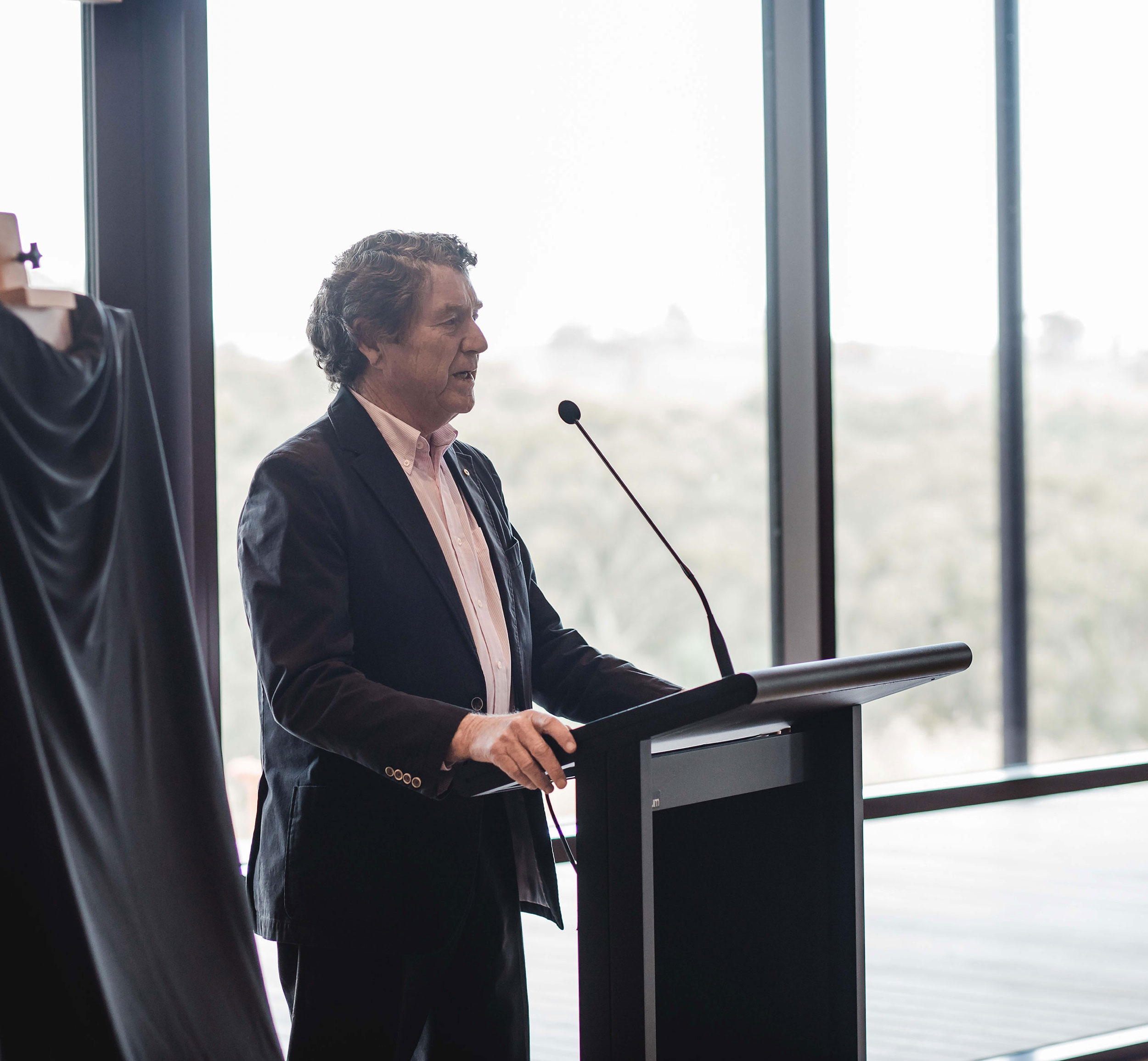
Ian McRae, ANAM Chair 2009-2019
One can’t help but admire McRae’s spirit of adventure, as well as his knack for understatement - for all he knew, he might have been leaping, in the dark, into a pile of quicksand. He was unsure how Brett Dean, Artistic Director, and Nick Bailey, the recently appointed General Manager, would feel about a Chair imposed on them by the Minister with whom they had just fought a very public battle, not realising that they were equally unsure how to deal with ‘the Minister’s appointment’. An informal meeting was arranged at a South Melbourne cafe. Dean and Bailey, like old soldiers back from the Boer War, regaled McRae with a blow-by-blow account of their victorious battle against Canberra while McRae listened patiently. When the campaign tales were exhausted, McRae quietly said, “Thank you, that’s very interesting; but I’m not really interested in talking about the past. I’d like to talk about the future.” Momentarily stunned by the realisation that they did, indeed, have a future to talk about, Dean and Bailey began outlining their plans for realising ANAM’s full potential. “I was immediately impressed with them both,” recalls McRae, “their passion, their commitment and their very clear vision for what ANAM could become. Yes, I thought, with these two in charge this organisation can have a great future.”
A new Board was assembled with only one survivor from the previous administration, the indefatigable Barry Sheehan. Amongst the new faces were some heavy hitters, including Penny Hutchinson, Director of the Victorian Government’s arts funding agency Arts Victoria; Janet Holmes à Court, the Perth businesswoman and philanthropist; and Phillip Bacon, the Brisbane gallerist and philanthropist, who helped to open golden doors to a previously unexplored world of support. Dame Elisabeth Murdoch became Patron of the philanthropy program, and Betty Amsden also helped out. Perhaps the most daunting of Garrett’s demands had been that ANAM show “a commitment and plan to diversify its income streams” – Canberra-ese for “less money from us and more from wherever you can get it.” With admired and influential figures like Holmes à Court, Bacon, Amsden, Dame Elisabeth and others lending their support, it became apparent that Garrett’s demand might possibly be achievable.
Settling into his role of General Manager, Nick Bailey started getting the full picture of ANAM’s situation, and it wasn’t pretty. He discovered, to his alarm, that it had been slack in reporting to Government; that far from winning over the City of Port Phillip, it had remained aloof and disdainful; that some faculty still discouraged their students from playing in the nation’s orchestras, resulting in a “who do they think they are?” attitude from the industry (and everyone else); donor income was virtually non-existent; and while performance quality was high, audience numbers were low. No wonder Garrett had wanted to call last drinks (“I probably would have been tempted to do the same if I knew then what he knew” Bailey later mused).
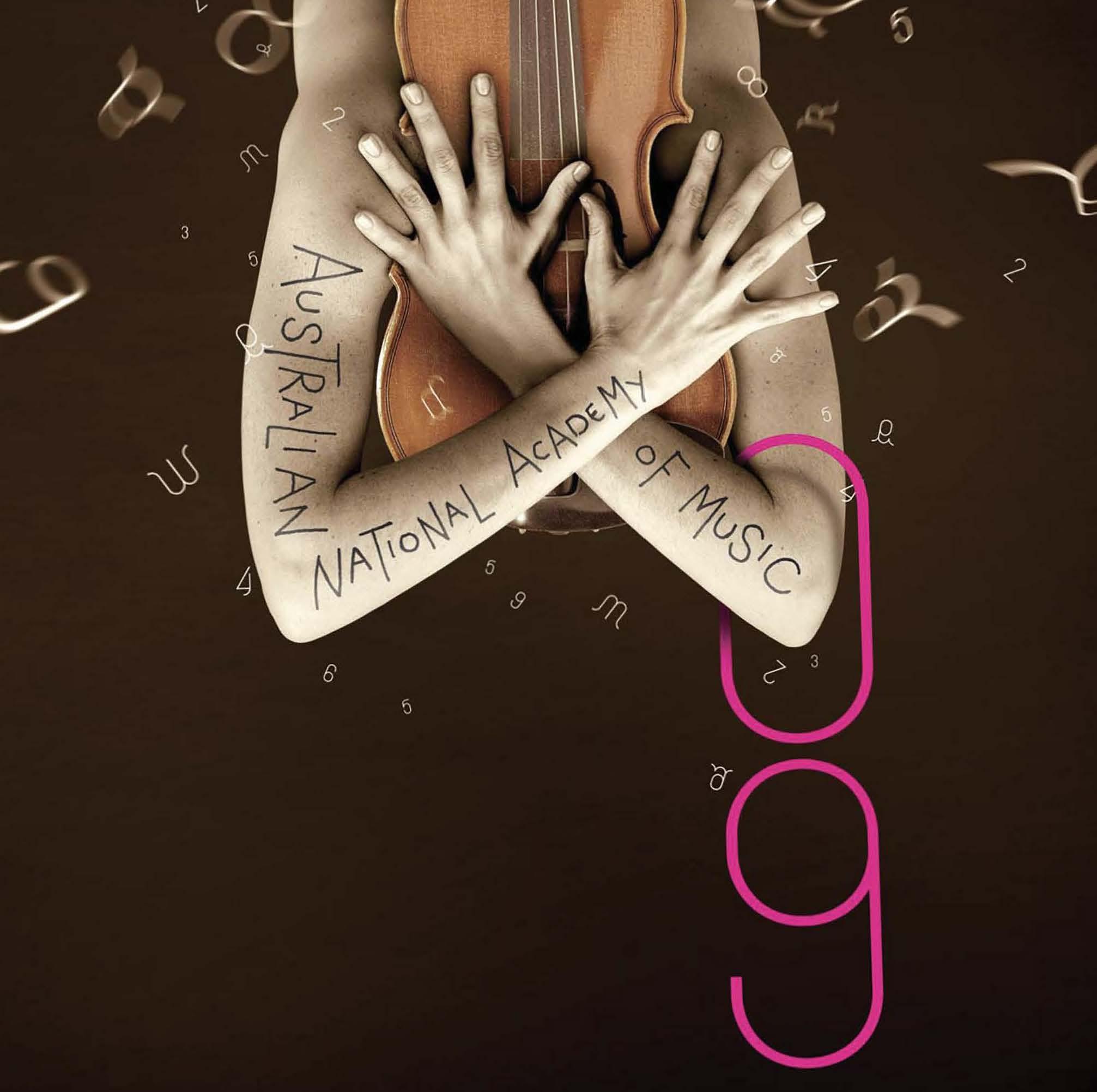
2009 Season Season Brochure
Off and Running: 2009
In ten high-pressured weeks, an entirely new program was devised for 2009 adorned with a list of stars - Daniel Harding, Richard Tognetti, Pekka Kuusisto, Meow Meow, Oleg Caetani and Cédric Tiberghien amongst them – and over 70 events, not including musicians’ solo recitals. Was it overkill? Definitely. But ANAM was determined to ensure that anyone who had written to a politician or signed a petition knew why they had done it, and that it had been worth it. “I felt that we had to be everywhere” Bailey had decided. Throughout 2009 the pace was unrelenting, staff and musicians were stretched to the max, but the overall energy was extraordinary: it was as if the adrenalin that had fuelled the political campaign in late 2008 was still careering through the organisation’s veins. ‘Aloof ANAM’ was replaced by ‘Collaborative ANAM’, and a long list of creative partnerships began to flourish, including with the Melbourne Symphony Orchestra, Orchestra Victoria, ASTRA, Victorian Opera, Australian Youth Orchestra, the University of Melbourne/VCA and ABC Radio. Matthew Hoy, the new Program Manager, attended the state orchestras’ planning meetings so that ANAM could share performance schedules with the orchestras’ international touring artists, offering an additional week in Melbourne for those artists up for an adventure. From these mended relationships with the orchestras grew the invaluable Side-by-Side program, in which ANAM players join the country’s orchestras for specific projects, playing amongst professionals to a professional schedule. Today, Side-by-Side projects are a central element in ANAM’s orchestral training, giving musicians the best possible workforce training with many of Australia’s professional orchestras, including the Australian Chamber Orchestra, and across the ditch with the Auckland Philharmonia. The program has resulted in a 180-degree pivot in attitude from the industry: ANAM is no longer regarded as conceited, but as the nation’s indispensable pipeline of talent.
These new partnerships were impressive, but perhaps even more so were those least visible to the wider public. Groups of musicians were taking music into the local community, with regular visits to schools and aged care homes. Musicians signed up as tutors for the homework club at neighbouring Park Towers, the local public housing complex. ANAM initiated and directed an annual community gathering, the Emerald Hill Festival, involving the various community organisations in the ’hood, including the South Melbourne Police who were based over the road. (Bailey clearly had his eye on the 20-year lease, up for renewal in 2016). Three musicians, Lina Andonovska (flute 2010), Rachel Curkpatrick (oboe 2011) and Douglas Coghill (viola 2011), accepted an invitation to work for two weeks with communities in Timor Leste. It changed their lives. Clearly, ANAM had dropped its gated-community attitude.
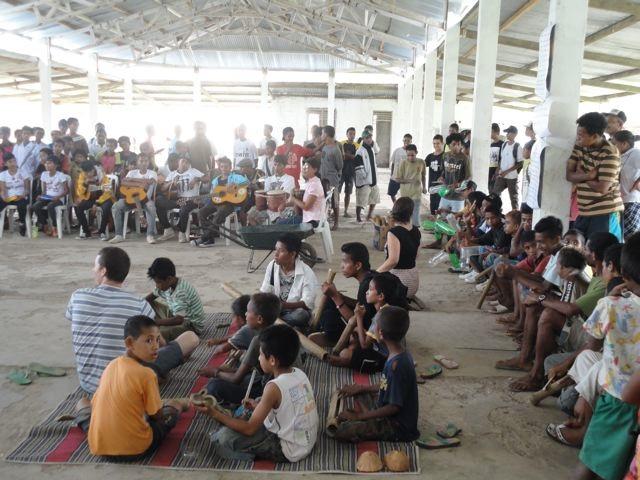
ANAM Musicians in Timor Leste, 2011
ANAM’s goodwill was reciprocated by Canberra, as Ian McRae explains: “My recollection is that the Commonwealth relationship healed quite early, because in six months we had made good progress on the matters they required to be fixed. We had a couple of quite good meetings with Garrett while he was Minister, and I felt the Department officers were quickly on board.”
On the revenue front, ANAM needed to lift its game in the art of development – a nice euphemism for persuading companies and individuals to become philanthropic partners – at the same time as it needed to capture more eyeballs for its increasingly groundbreaking projects. Enter Lisa Mitchell, a smart, good-humoured powerhouse, who was bold, or crazy, enough to take on both tasks. Working with superb designers, she completely overhauled ANAM’s public face, zhoozhing the website and brochures with panache. Thanks to Mitchell’s skill, ANAM didn’t just sound great, it looked great too. Casting her eye over ANAM’s faculty – the likes of cellist Howard Penny and pianist Timothy Young, to name just two - Mitchell saw untapped marketing gold, “amazing musicians - it’s not like it was a bunch of has-beens, or people at the end of their career.” Mitchell correctly intuited that audiences like to follow stars, and up-and-coming stars, so she created Music Makers, a widely-distributed broadsheet promoting ANAM’s faculty, musicians, guests and events in thumbnail portraits, the message being “Who knew that one Town Hall could house so much talent!”.
Mitchell also made the correct call that modest but consistent support from a large group of individuals can be just as valuable as big corporate donations, so in 2012 she launched ANAMates, a club membership which offered, for $55 annually, free entry to dozens of events and hard-to-resist discounts to others. City of Port Phillip residents were offered free membership, a welcoming gesture to help ameliorate the residual ambivalence and antagonism still being expressed in some quarters. Make friends, build goodwill.
Mitchell’s positive energy generated offers of practical support from others. The late Jan Grant, owner of a famous bakery in Central Victoria, came forward with the ingenious idea for a support program. As Grant said “I don’t have $10,000 to give to support a musician, but I have ten friends each with $1,000 to give”, and so was born the ANAM Syndicate program, where groups of supporters would gather together and support an individual musician’s living expenses. The syndicates, once up and running, developed their own organic camaraderie amongst the members, who also enjoyed the overriding satisfaction of seeing ‘their’ student progress to become an artist. Soon, they were having so much fun they were inviting their friends to join. The fruits of the syndicate program were more than monetary; the real dividend was the lasting relationships it nurtured between supporters and musicians. Today the program has more than 220 members, and almost all of ANAM’s musicians are now supported through this program.
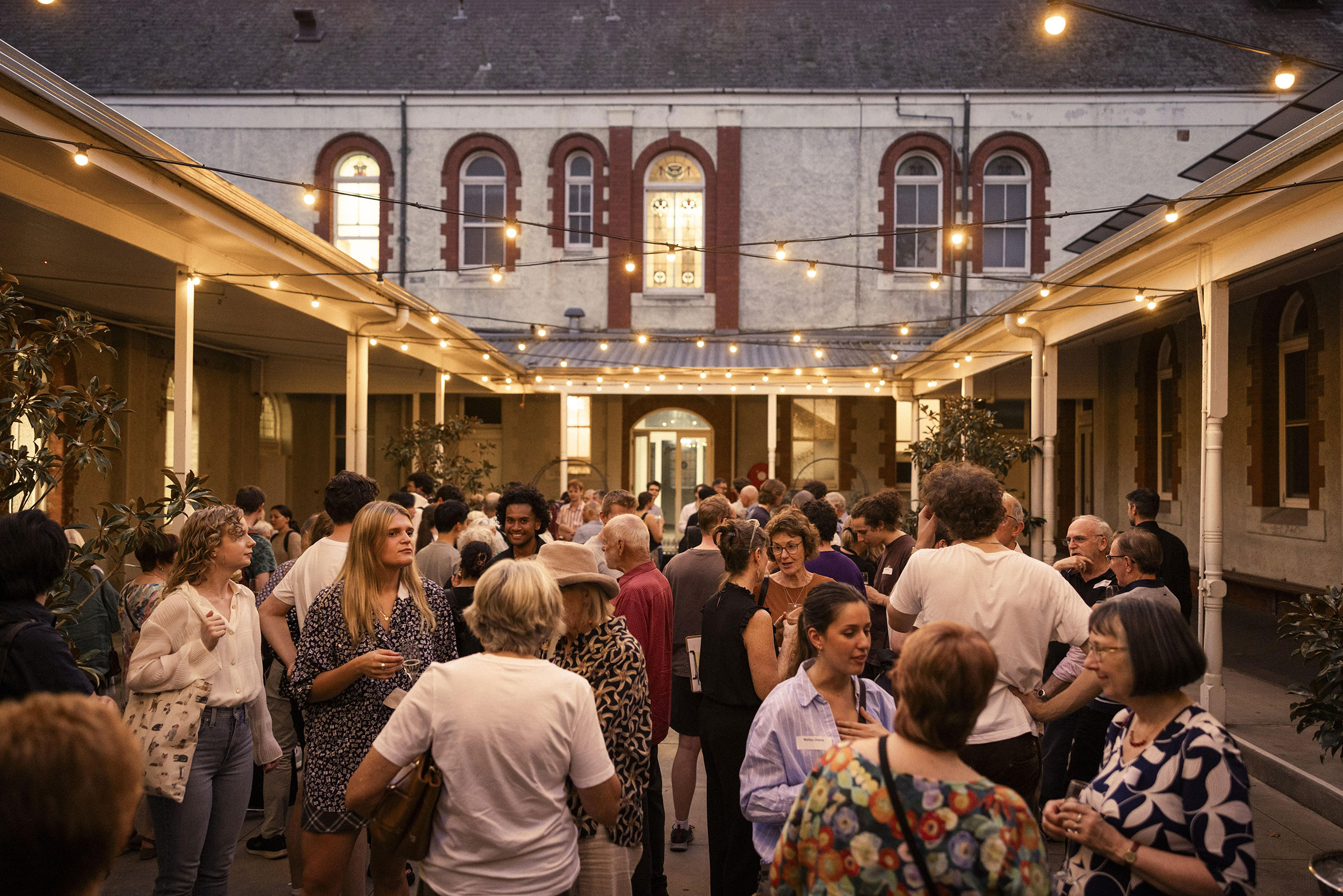
An ANAM Syndicate event, 2025
The combined attention paid to small donors as well as the big ones yielded spectacular results. When Mitchell joined ANAM in 2009, annual philanthropic income was around $10,000; when she left four years later, it was over $600,000. The relationships she built provided a solid platform for Anne Frankenberg and Kate Mazoudier, who followed her in the role; under Mazoudier, ANAM’s operational philanthropic support now exceeds $2m each year.
As 2009 drew to its close, Brett Dean, the Artistic Director who’d put his composing obligations on hold to save ANAM from closure, was finally ready to step down, confident that ANAM was in a better place. The Board had to find his successor. After an exhaustive international search, one candidate stood head and shoulders above the rest – Paul Dean, a leading clarinettist, composer and, as it happened, Brett’s brother. This set the Board an unusual dilemma. “We can’t appoint Paul Dean,” some members argued, “he’s the incumbent’s brother: how is that going to look?” “Well, we can’t not appoint him because he’s the brother,” said others, “he’s so obviously the best candidate.” Common sense prevailed. Paul Dean succeeded his brother without controversy.
The Winds of Change
Paul Dean wanted to underline the ‘Australian’ in ANAM. A conversation with pianist Michael Kieran Harvey had got him thinking. Kieran Harvey pointed out that pianists trained at Budapest’s Liszt Academy had a distinctive tone because, for them, the works of Liszt and Bartók were not add-ons, but foundational to their repertoire, so that their performances of Beethoven and Haydn sounded different from someone trained in Berlin or New York. Paul was also aware of a rich body of Australian solo and chamber music languishing on library shelves, unplayed, and that “no one had any of that music in their heart or soul or under their skin, and this music could just evaporate and disappear.” In 2011, in partnership with the Melbourne Recital Centre, ANAM launched Australian Voices, a series of up to eight concerts annually, each showcasing an Australian composer – the likes of Meale, Benjamin, Glanville-Hicks, Smalley, Sutherland, Banks, (Brett) Dean and Mills in the first year alone. The series offered one revelation after another, not least of which was the welcome discovery that there was far more to Arthur Benjamin than Jamaican Rumba. Each concert was recorded for broadcast by the ABC, revealing hidden gems such as Gerard Brophy’s Kalighat Votives to the entire nation. The series ran until 2016 and profiled another twenty Australian composers past and present. In terms of getting stuff actually played, no one was doing more for Australian music.
Paul Dean also oversaw the arrival of four trumpeters, four trombonists and a tubist (from 2012) and up to four percussionists (from 2013). “They brought a new air of professionalism to the place,” he remembers. “Particularly with teachers like Michael Bertoncello (trombone), David Elton (trumpet) and Peter Neville (percussion). It was a case of ‘You’ve gotta work hard, and we’re not going to let you get away with not working hard.’ It was like a massive dose of fertiliser for the place, and it brought something new to the sound of the Town Hall, which I found extremely exciting.” At the weekly Performance Class, it was like the storming of the Bastille, as the rule of the string quartet and piano sonata was toppled before the onslaught of brass quintets and percussion quartets. Behind the scenes, Paul spent countless hours valiantly doing the job he liked least, schmoozing sponsors in order to build a professionally equipped percussion studio, eventually securing support from the Yamaha Foundation and the Perth-based Minderoo Foundation.
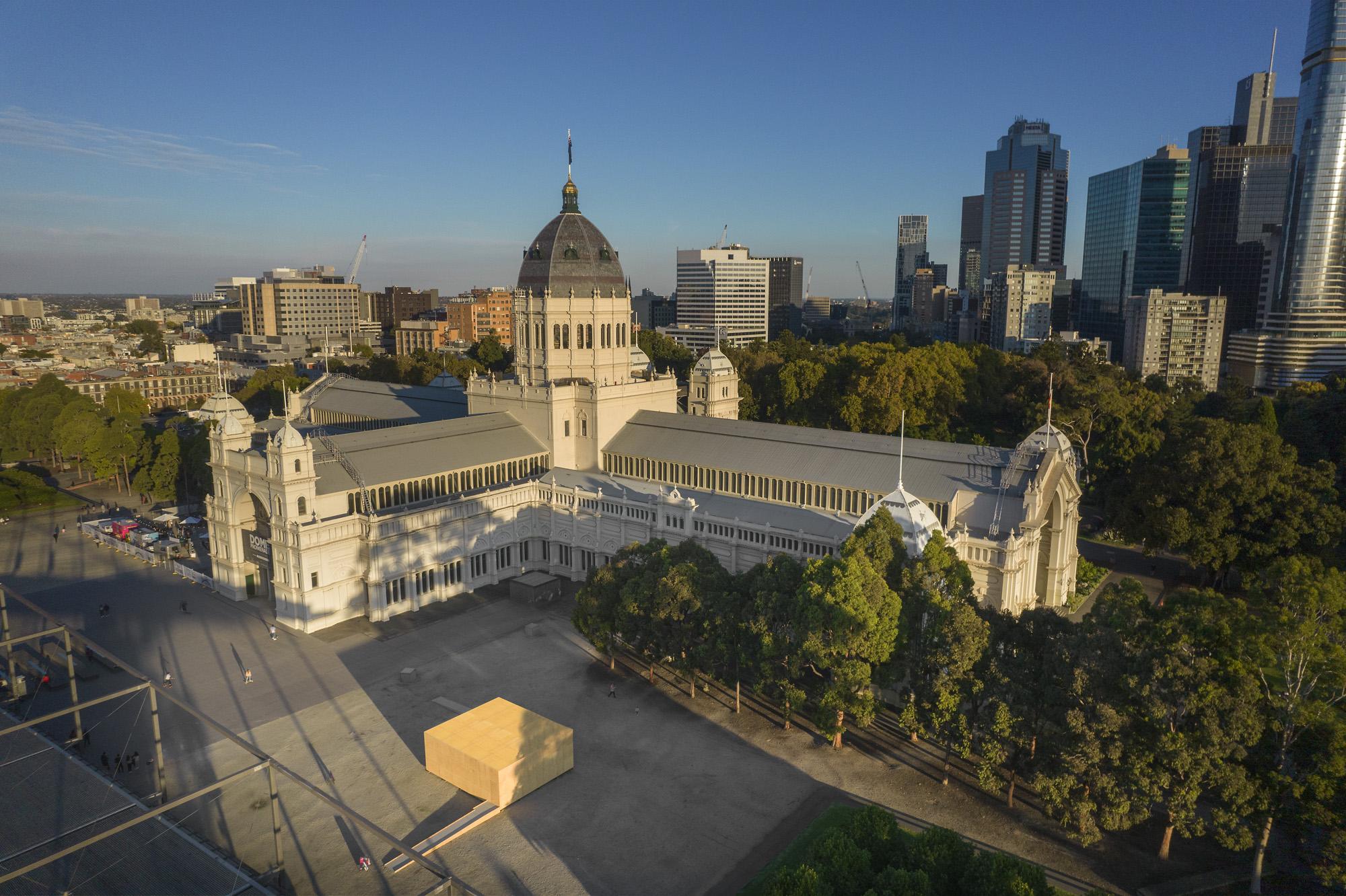
ANAM Quartetthaus, Melbourne Museum, 2023
Because ANAM exists to give performing experience to young professionals, mention should be made of four exceptional projects from this period which took ANAM’s classically trained musicians beyond their comfort zone, drawing in new audiences in the process. Wunderschön (2009), a song cycle arranged by Reinbert de Leeuw from songs of Schumann and Schubert, gave a team of ANAM players their first theatrical experience in a production starring cabaret sensation Meow Meow, designed and directed by Rodney Fisher. Wunderschön took place in a shadowy European train station waiting room dominated by a massive gravesite, heaped with cut flowers and eerily lit from below.
Eddie Perfect’s Songs from the Middle (2010) was his valentine to the middle-class suburb of Mentone where he’d grown up. The project threw ANAM’s musicians together with the Brodsky Quartet into pop ballad/music theatre territory in a collection of songs touching and satirical (My Sister Worked at Bunnings, The Frankston Line, etc.) orchestrated by Iain Grandage. In Conversations with Ghosts (2012) ANAM players entered the world of Paul Kelly through his settings of poems by Yeats, Slessor, Tennyson and others, orchestrated by James Ledger and featuring recorder virtuoso Genevieve Lacey. The show toured nationally and the commercially released CD won an ARIA. Each of these projects was a public and critical success, and enjoyed repeat engagements either in Melbourne or interstate. But the biggest payoff was for the musicians, who got to work with artists and idioms outside their normal sphere.
But perhaps the biggest and most ingenious, ‘ANAMesque’ triumph of all was the ANAM Quartetthaus. The string faculty had been pressing Program Manager Matthew Hoy to schedule more quartet performances, including with repeat performances of their repertoire. Working with designer Ben Cobham from bluebottle, the ANAM Quartetthaus was born. When it finally took form outside the Malthouse Theatre as part of the 2011 Melbourne Festival, passersby were intrigued by what looked like a giant cube from a child’s building block set. Inside, 52 listeners sat in two circles around four players. When the music commenced, the stage began to revolve slowly, imperceptibly, so that a listener might realise only at the end of the concert that they’d begun facing the first violinist and ended up opposite the cellist. ANAM Quartetthaus was revolutionary in every sense, attracting accolades from the likes of David Hertherington from Kronos Quartet (“I want one in my backyard”) and Sir Simon Rattle (“a completely brilliant idea, beautifully made; exactly how you should hear string quartets”). Its intimacy created a new synergy between musicians and audience; each group totally exposed to the other’s physical presence. ANAM Quartetthaus’s first sold-out season in 2011 was followed with repeat seasons in Melbourne and, as guests of the Perth Festival in 2013. It would have gone to London for staging outside the Royal Albert Hall as well if not for an unforeseen virus, but more on that later.
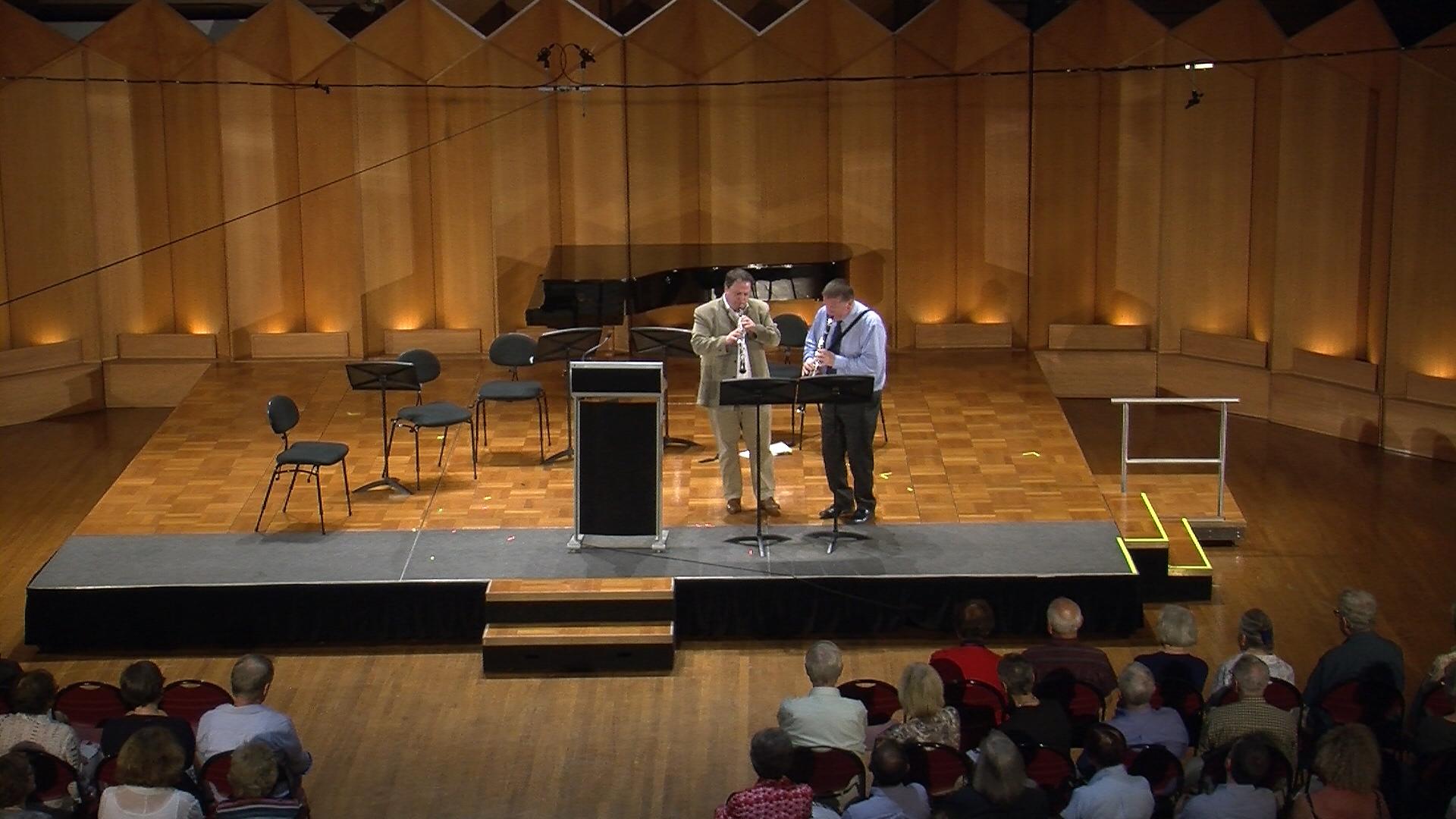
Paul Dean (Artistic Director 2010-2015) r., ‘handing over the baton to’ Nick Deutsch (Artistic Director 2016-2020) l., December 2015
ANAM’s next Director was Sydney-born oboist Nick Deutsch (2016-2020) who had built a stellar career playing Principal Oboe in just about every great German opera house (including Bayreuth - he knows the Wagner canon by heart), as well as a host of orchestras including Leipzig’s Gewandhaus and Munich’s Philharmonic. Deutsch, whose nominal home is Leipzig (the city of Bach, Mendelssohn and Schumann), lived deeper in the European tradition than many Europeans. His personable nature and superb musicianship had won him friends globally (he is also multi-lingual) and he quickly put his connections to work on behalf of ANAM’s musicians by building relationships with some of Germany’s most prestigious organisations. Thanks to Deutsch, ANAM players became eligible for guaranteed positions with the Mahler Chamber Orchestra Academy, the Berlin Philharmonic’s Karajan Academy and the Bavarian State Opera’s Hermann Levi Academy, where their continuing presence has been deeply valued.
If the contrasting examples of Paul Dean and Nick Deutsch show us two quite different sets of aesthetic leanings – one wishing to nurture a nascent Australian sensibility, the other emphasising connection to an older tradition – they only prove the obvious fact that no Artistic Director can cover all the bases simultaneously. A Director who tries to be all things to all people will probably fail. The most valuable contribution any Director can make is to give what is best and most unique of themselves. By sharing the values and knowledge that have made them the distinguished artist they have become, they offer their younger colleagues a clear model of what it takes to be an artist.
Ceiling Issues
By the time Deutsch was in his third year as Director, ANAM had fallen into a happy rhythm. Its relationships with the Commonwealth and the City of Port Phillip were smooth, the audience had grown and the musicians were enjoying opportunities unique to ANAM. Was everything running too smoothly, too happily to last? Murphy’s Law decreed that it was.
On 18 October 2018, almost ten years to the day since Garrett’s fax had upended ANAM’s world, another disaster struck. At about 10am that morning, screams were suddenly to be heard from the administration area on the first floor. Clouds of dust started billowing down the corridors as terrified staff and musicians raced to the exits, choking and covered in fine debris. A large section of ceiling had collapsed over several desks discharging several skip loads’ worth of plaster and roof insulation, and then soon after, 12,000 litres of water from a burst sprinkler pipe. The entire Town Hall was evacuated – “This is not a drill” – and everyone huddled at the assembly point across the street where a head count was conducted while the fire brigade rushed in to assess the damage. The news was not good. “We are very fortunate not to be dealing with fatalities”, the firies reported. The building was declared unsafe and ANAM and the other tenants forced to find temporary digs, whilst Council ‘had a think’.
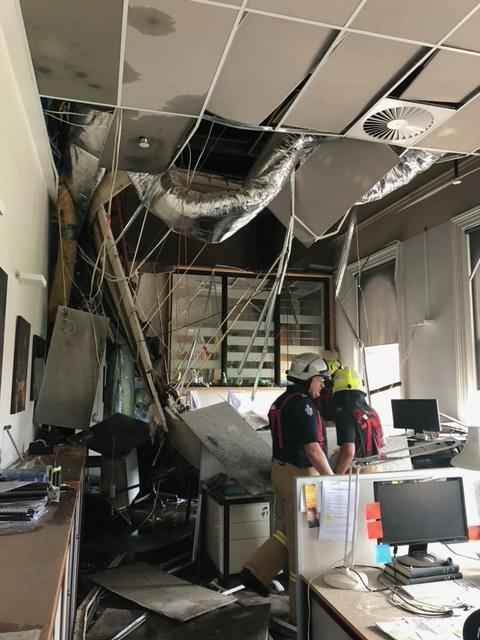
ANAM Administration Office, 18 October 2018
What followed was heart-warming generosity, as numerous organisations - Musica Viva, Melbourne Recital Centre, Melbourne Symphony Orchestra, BalletLab, NIDA, Malthouse Theatre, The Australian Ballet, St Silas’ Church in Albert Park and the Melbourne Conservatorium - opened up their performance spaces and studios so that, miraculously, all 36 of ANAM’s remaining 2018 performances, plus five weeks’ of lessons and classes for ANAM’s studio programs, could go ahead. The contortions performed by the administration and faculty teams managed to keep the show on the road (a useful dry run for a much more dramatic ‘pivot’ enacted by the organization two years later). The generosity of these organisations, along with many supporters who offered their homes as practice studios, was a humbling demonstration of communal goodwill. It also showed how far ANAM had come in changing public perception. Ten years earlier ANAM still aroused resentment in many, if not most, quarters. Not now. Reaching out and making friends was bearing fruit, precisely when it was most needed.
The water damage was extensive. More than a third of the library collection was unsalvageable. Numerous pieces of furniture and electrical appliances were ruined. The stench of waterlogged carpet hung around for months. Most seriously the staff who had directly experienced the incident, whilst miraculously not physically injured, were scarred. By the time musicians returned in March 2019, most of the Town Hall had been given the all-clear by Council, but the upstairs administration area remained out of bounds. The writing was on the wall: That grand old lady, the South Melbourne Town Hall, was not ageing gracefully and it would take more than collagen and Botox to hold her together (just goes to show what happens if you don’t look after your oldies).
Still, she did hold together for another year, which was a small mercy. Nick Deutsch’s final year as Director, the year 2020, was shaping up to be a cracker. He had some spectacular events planned - a complete cycle of Beethoven quartets in the ANAM Quartetthaus presented by Arts Centre Melbourne; Simone Young to conduct Korngold’s Die tote Stadt; a week of percussion masterpieces directed by American legend Steven Schick, and more. It was a peach of a program. Then, news bulletins started reporting a mysterious killer virus emanating from Wuhan in China. On 19 January, Covid-19 hitch-hiked to Melbourne on an unsuspecting international traveller. Soon, new cases were popping up all over like cape weed. On 31 March, Premier Andrews declared a lockdown, a term as novel to most Victorians as the virus itself. Over the next two years as Covid-19 cases waxed and waned, Melbourne would be locked down six times for a total of 262 days, more than any other city in the world.
Love in the Time of Covid
Much of a musician’s existence is solitary. Perfecting a technique requires hours alone in a studio, problem solving, developing muscular patterns and creating new neural pathways. Time spent socialising is especially precious and necessary for musicians – they already spend so much of their lives alone. Lessons, conversely, require close physical contact with a teacher, with the need to demonstrate the minute muscular movements that lead to mastery. How on earth were young musicians supposed to stay sane and not be dragged into a dark hole of depression? And how could they stay motivated when the industry they wanted to enter seemed to have vanished overnight? There was no handbook on how to deal with this catastrophe. ANAM, like every other school on the planet, would have to write its own.
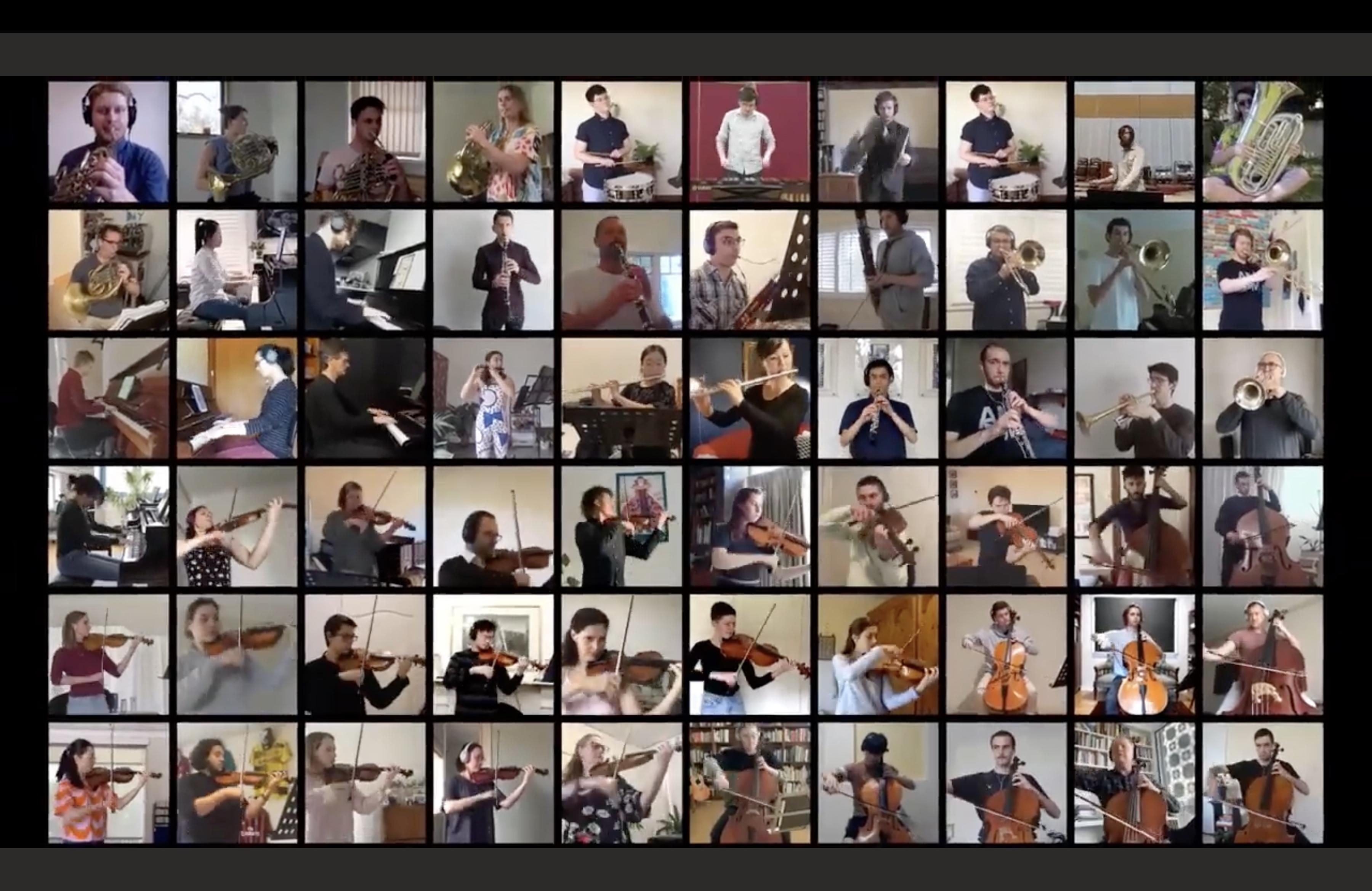
ANAM Orchestra perform Britten “Young Persons’ Guide to the Orchestra”, December 2020
First, flights home were funded for those interstate musicians who wanted to return to their families whilst they still could. Next, pianos were delivered to those pianists who didn’t own one. Likewise, all the big percussion gear was distributed to percussionists; no point leaving it unplayed in the Town Hall. Care packages were distributed to staff and musicians living on their own in Melbourne. Then, a schedule of online lessons and activities (including Friday night drinks) had to be drawn up to keep everyone connected and motivated. Online-ANAM was launched 20 April 2020 by Deutsch and Manager, Training Program Lucy Ericson and her team. Zoom became everyone’s lifeline to the outside world, and musicians who lacked adequate internet were given an allowance to improve it and to purchase quality microphones. Teachers, such as Howard Penny, who had never used Zoom in their lives had to become overnight experts. Piano teacher Tim Young, already something of a tech nerd, turned his home studio into a movie set: “I invested in some professional lighting and quality cameras with cine lenses and an audio interface where I could mix a combination of Omni and Cardioid microphones… I removed the lid of my piano so that I could have a monitor mounted in front of me while playing the instrument. I was then able to switch with an ATEM HDMI switcher between 4 cameras - left, right, in front, and then one above me rigged on a c-stand so that the students could see me demonstrate as if they were looking over my shoulder.” If there were an Oscar for Piano Teaching: Best Cinematography, Young would have walked away with it.
As the months dragged on, hope of an end to the lockdowns kept rising, then receding. Life was now scripted by Samuel Beckett. People and Culture Manager Charlotte Cassidy recalls endless cycles of ‘return to the SMTH’ planning, most of which ended up being cancelled. As the staffer responsible for musicians’ welfare, she was increasingly preoccupied with “everyone’s fear and anxiety.” Covid was obviously a threat to physical health, but its more insidious threat was to mental health, particularly for a bunch of over-achieving, pathologically-driven, young people. Cellist Daniel Chiou remembers: “Learning online was definitely challenging at first, but over time I adapted. Lessons with Howard (Penny) were a highlight of the week and a treat. Being able to connect and chat with other faculty members also made a big difference. Of course, the absence of live music sucked. As the months went on, I often felt drained and helpless. But it wasn’t until a few years later that I realised how fortunate I had actually been. Had I been a graduating student, studying at a regular university or conservatorium, or working as a freelancer, I might have stopped practicing altogether. I would have had zero access to regular, quality lessons, masterclasses with international artists, workshops, and those incredible webinars. It was the busy online schedule that kept me afloat – mentally and spiritually. Howard pushed me twice a week to stay on schedule; to submit those weekly recordings and to participate in workshops and talks. Despite the difficulties, ANAM online was, for me, a lifeline. I only understood that in hindsight. I guess my biggest takeaway is this: if you were tenacious enough to grow and persevere as a performing musician through Covid (even imperfectly), that says something about you. And that kind of resilience will carry you a long way.”
The ‘incredible webinars’ Daniel refers to were largely thanks to Deutsch. He and his faculty colleagues organised online visits, classes and lessons from colleagues across the globe, including Wynton Marsalis, Simone Young, Barbara Hannigan and principal players from the world’s greatest orchestras. Like ANAM’s musicians, they too were sitting at home with public activity cancelled, not much to do, and only too happy to jump online and share insights, answer questions and give lessons to musicians on the other side of the world.
As if Covid wasn’t enough, there was more bad news.
In June 2020 the City of Port Phillip informed Nick Bailey that, after further inspection, the entire Town Hall was ‘now’ found to be unsafe, and ANAM should find alternative accommodation for the next three or four years whilst it was ‘sorted out’. When he asked if ANAM had been operating in an unsafe building throughout 2019 after given the ‘all-clear’ from Council to return, Council demurred and would only restate their original statement: the Town Hall was ‘now’ unsafe. It felt like living inside an episode of Utopia.
A North of the River Oasis
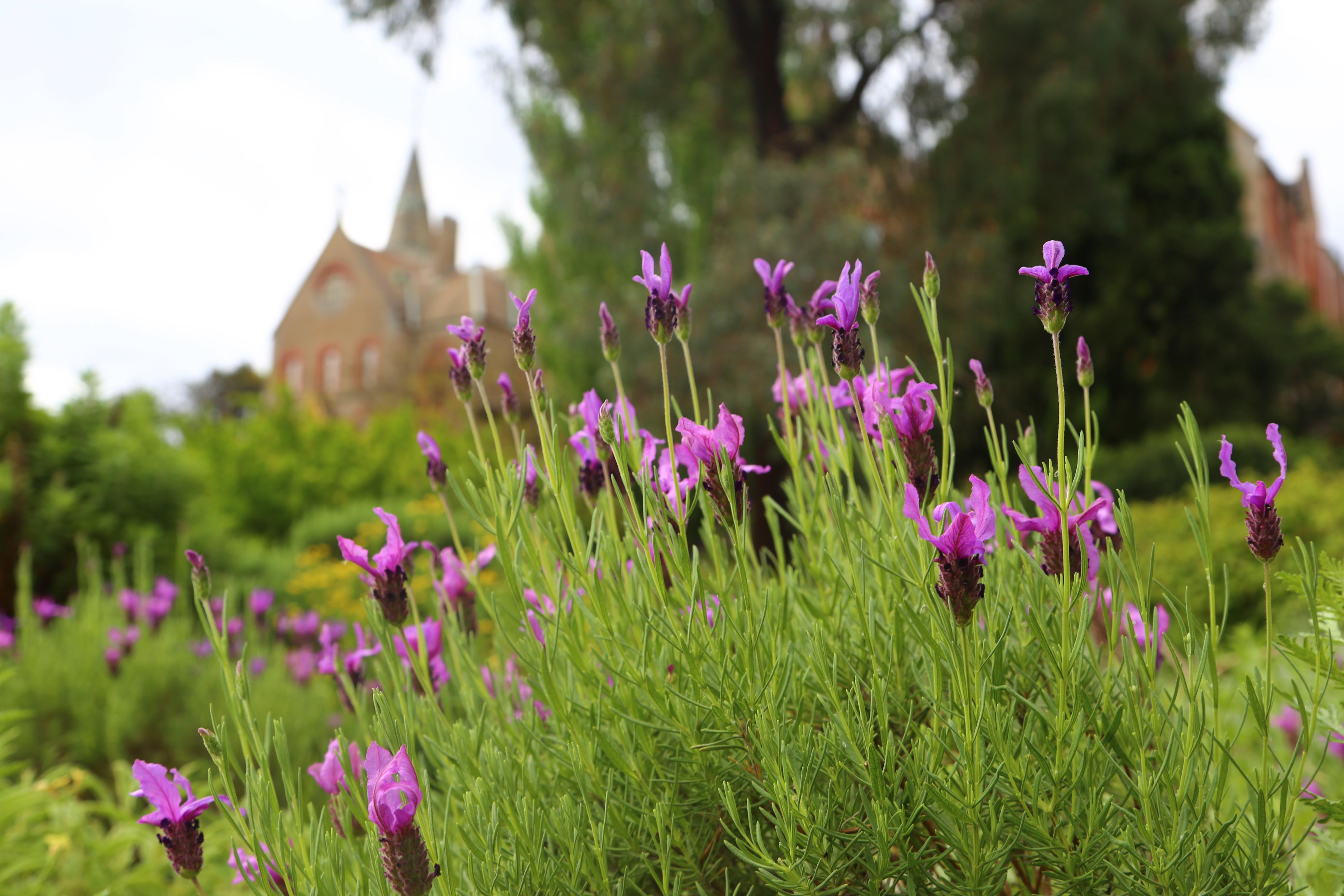
Abbotsford Convent, 2022
Bailey, travel permit in hand, set off inspecting potential accommodation options which ranged from disused warehouses to floors 25 to 27 of newly vacant office blocks in the CBD. When the possibility of space at the Abbotsford Convent came up, he was determined to secure it. “I felt that after all the scarring and all the hurt and the disruption of collapsing roofs, Covid and lockdowns, this was the only place in Melbourne in which ANAM could come to rest and heal.” Situated by the Birrarung/Yarra, the Convent is a collection of historic bluestone buildings, including a chapel, housing a range of artists and artisans. It offered a fresh start for everyone, musicians, staff and audiences, who enjoyed its ambience and beautiful surroundings. As it turned out, the Convent – with many of its tenants having ended their studio leases during lockdowns – was in need of new tenants. “It was a marriage made in heaven” Bailey says.
ANAM’s post-pandemic fresh start also included a new Artistic Director, Finnish pianist Paavali Jumppanen. Jumppanen had visited ANAM as a guest artist on three occasions since 2010, and had an appreciation of its program and ethos. He came with a dazzling international reputation and a colossal repertoire spanning the entire keyboard literature. Renowned for his complete Mozart and Beethoven cycles, Jumppanen has also distinguished himself in the works of Boulez, who personally mentored the pianist. The music gods were smiling when he put up his hand for the job.
Emerging from the darkest days of the lockdowns, ANAM felt it was important to ‘land a big idea’, around which everyone could gather. When a funding opportunity arose in the form of RISE, the Commonwealth’s Restart Investment to Sustain and Expand fund, they pondered why not apply for a grant to commission 67 Australian composers to each write a solo or duo work for each of ANAM’s 67 musicians? It was crazily ambitious, but so was ANAM Quartetthaus. The very ANAMesque proposal was successful, and ANAM invited composers to submit their ideas. With the selection process finalised, composers – for many, also a lifeline out of the Covid darkness – got to work on their assignments, many working in close collaboration with their dedicatees, most of whom had never had the experience of having something written specially for them. When completed, the resulting 67 works would represent the single biggest snapshot ever taken of Australian – or perhaps any country’s – musical activity, a one-off cross-section filled with a gobsmacking variety of idioms. The full set of newly minted works were presented to the public in March 2022 in the ANAM Set Festival, by which time the lockdowns were over and ANAM had moved into its new, if temporary, home in Abbotsford. Whilst drawing a line under the Covid era, the ANAM Set has also continued to take ANAM forward and is still running: by the end of 2026 more than 130 works will have been commissioned for – and premiered by – ANAM’s musicians.
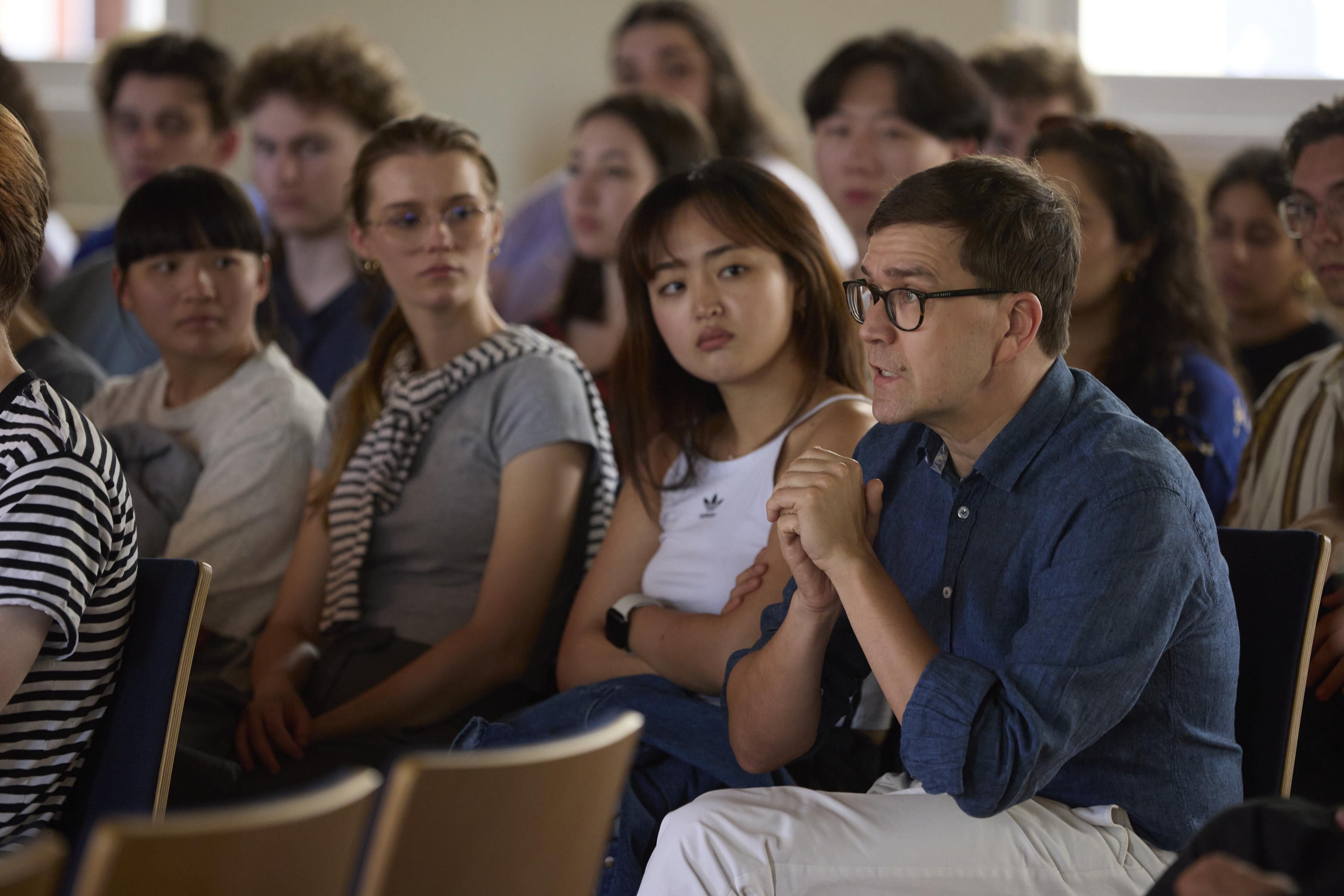
Paavali Jumppanen (Artistic Director 2021-2026) at Abbotsford Convent, 2023
After moving his wife and two young daughters to Melbourne, Jumppanen immediately stipulated that chamber music be a weekly fixture in ANAM’s routine. Previous directors had, of course, encouraged chamber music, but none to the extent now demanded by Jumppanen. He also encouraged musicians to consider themselves not just as musicians, mastering works for other people’s enjoyment, but artists who are mindful of what they stand for and what they stand against. Jumppanen firmly believed that the artist/musician cannot be insulated from the world, or its crises – growing up next door to Russia will do that for you – and has full license to take part in society’s conversations through their art. This, at a time when these considerations were ricocheting across the country, taking down artists, boards, festivals and companies in the process. But this only strengthened Jumppanen’s resolve. To stimulate their thinking, he presented a fundraising concert for Ukraine, invited ANAM musicians to choose ‘activist’ works for the Brave New Worlds series, convened a discussion on what global warming means for the arts, and engaged First Nations musicians to share stories and musical ideas.
(More) New Beginnings
While ANAM got on with life post-Covid, the South Melbourne Town Hall remained out of bounds. Surrounded by cyclone fencing and deteriorating by the day, the grand old lady was wasting away and wearing a ‘keep out’ scowl. It was a tragedy. Nick Bailey, the General Manager who’d already guided ANAM through a funding crisis, a collapsed ceiling and a pandemic, had long contemplated where ANAM might put down roots long-term, for while the Convent was a godsend, it was not ideal. For instance, it lacked good practice facilities, which have had to be created in a disused window furnishings showroom ten minutes’ walk from the main campus. Each time he sat down to list all the elements that would make an ideal facility for ANAM, he kept coming up with the same answer: the South Melbourne Town Hall. “We just had to fix the thing,” Bailey concluded. So, proceeding on the principle that if you don’t ask you don’t get, he and the Board went to Council with an audacious and unprecedented proposal: a 50-year lease, in return for which ANAM would raise the funds and co-ordinate the restoration. For an organisation that did not own the asset, anything less than 50 years, they argued, would not attract the government and philanthropic support required to do the job. For four years they negotiated with Council and the local community, developing a plan which would save the building, create a world-class training and performance destination venue and allow for more public access for the community than before. Bailey can be persuasive – years of dealing with Canberra have taught him how. On 15 March 2023, Council unanimously voted ‘yes’ to ANAM’s proposal, to cheers and applause from a packed Chamber. The disconnection with Council and the local community was clearly put to bed that evening.
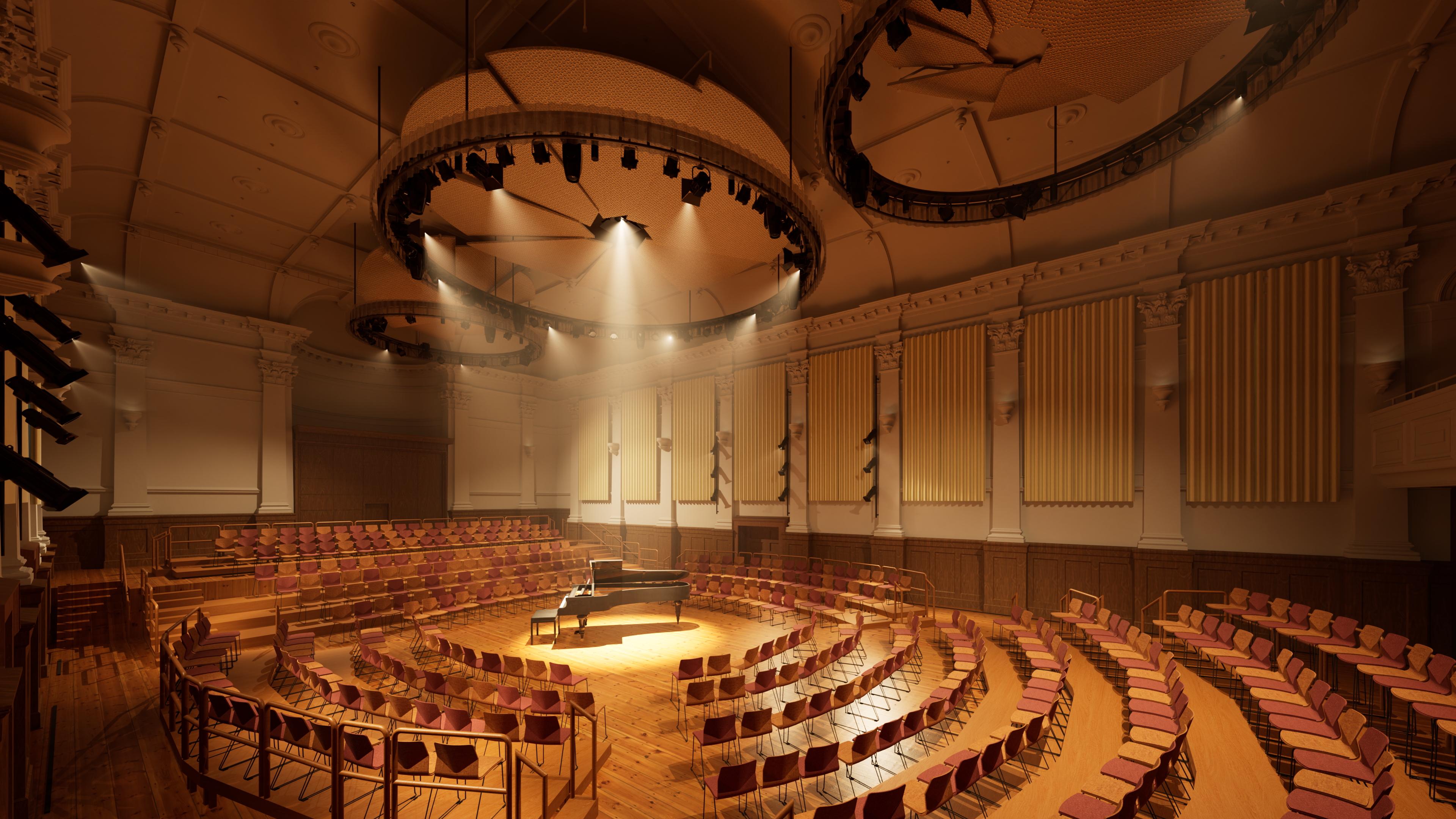
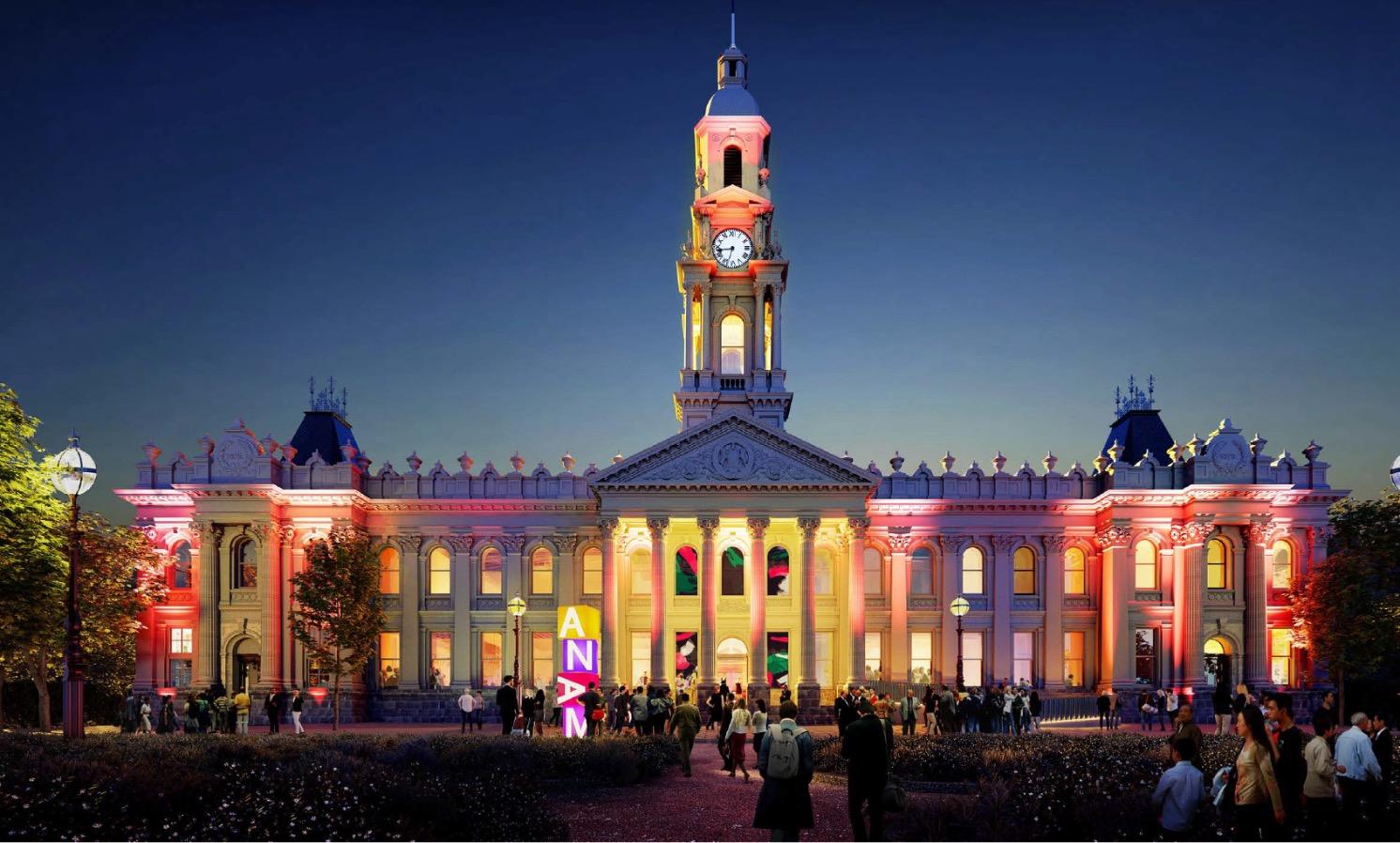
Render of Main Hall, South Melbourne Town Hall (PEA Architecture + Urban Design)
Now in March 2026, the Town Hall is nearing its glorious reunion with people, music and life. Guiding the restoration is the acclaimed Victorian architect Peter Elliott – an expert in this type of job – and his passionate and committed team. The costs are huge: $40 million being invested by Council to make the building structurally sound, $25 million from the Commonwealth, $30 million raised by from ANAM’s community of supporters (a remarkable achievement for an organization of ANAM’s size) and $10 million still under discussion with the Victorian Government – but $105 million to preserve a national treasure for another century is cheap. The reopened Town Hall will be a boon for local businesses, as patrons once again stroll down Clarendon and Park Streets, grabbing a coffee and buying lunch or dinner on their way to an event in the Town Hall, whether it be an ANAM concert, stand-up comedy, jazz, dance, theatre, a public lecture or whatever can be imagined. ANAM needs South Melbourne, and South Melbourne needs ANAM.
Before the British arrived, the hill on which the Town Hall now stands was the meeting ground for the clans of the Kulin Nation; here the freshwater Wurundjeri and saltwater Boon Wurrung peoples held ceremonies lasting days. The colonists, in their ignorance, called the place Emerald Hill. Bailey and Elliott believe it is time to bring the Kulin presence back into the Town Hall’s present. Consultations with Wurundjeri Aunties have informed the design approach by Elliott and his team at a very deep level for two and a half years. Early on, the Aunties had expressed their disquiet at the building’s history – it had of course served as a courthouse and a gaol – but said to the team that filling it with young people, music and gathering provided the healing that the building needed. They had also said “When we do culture, we sit in a circle” which, with the experience of the ANAM Quartetthaus still present, proved a light-bulb moment for the design team. So ‘the circle’ will be the default layout of the new hall. Design motifs suggested by the Aunties will adorn the interior, honouring the site’s true owners. The sincere hope of all involved is that the reopened South Melbourne Town Hall will once again be a special place where people from all over can gather together, in a circle, to do culture.
I’ll see you there.
Phillip Lambert
ANAM Librarian (2003-2023)