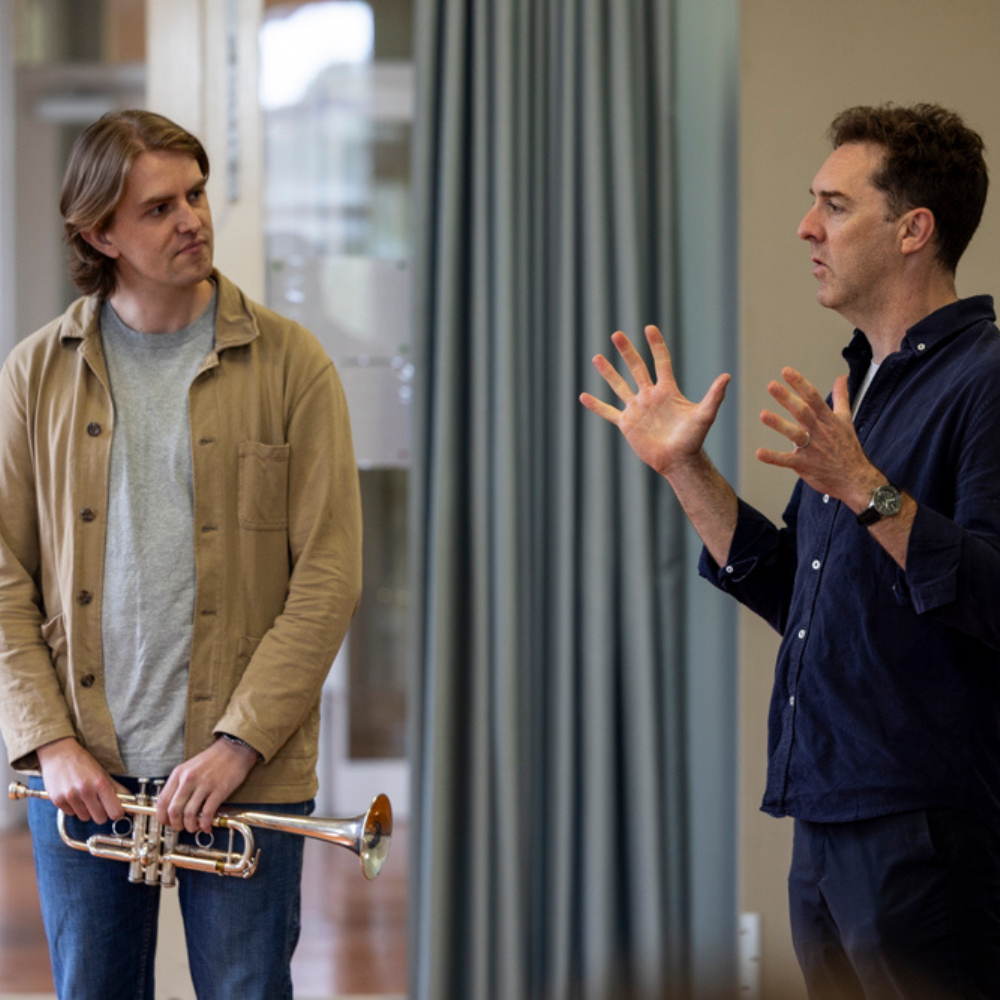
At the heart of learning is being shown the possibilities.
When percussionist Thea Rossen was attending the Australian National Academy of Music (ANAM) she remembers an incredible workshop run by the founding Artistic Director of Speak Percussion, Eugene Ughetti. “He had one bag with ordinary percussion mallets, and another with the teeniest, tiniest mallets I’d ever seen,” describes Rossen. This simple gesture encapsulates the mark of a great mentor: it’s not about telling students what to do but rather showing them novel ways of doing things.
Across ANAM’s 30-year history, a global network of artists and performers have shared their toolkit just as refreshingly, providing invaluable mentorship for our musicians.
To uncover what else makes an effective mentor, alumni, faculty and current students share their approaches and observations, alongside reflections on why it is so vitally important.
Promote side-by-side learning
While anyone can read a textbook, what makes ANAM unique is the opportunity to learn and perform side-by-side with professional musicians who act in mentoring roles.
“Preparing, rehearsing, and performing alongside someone with a wealth of experience is an extremely powerful way of absorbing how things are done,” says ANAM’s Head of Piano, Timothy Young. He believes all effective mentors demonstrate curiosity, humility and an eagerness to learn. In this way, a mentorship is always two-way. “You learn from your students as much as students learn from you,” says Young.
Working in real time with mentors at ANAM was influential for Rossen, who is now renowned for her intuitive, contemporary, and inviting approach to both music-making and exploration of issues such as climate change. “I learned first-hand it’s about bringing people along with you, so they leave the concert either having deeply felt something, or wanting to go and learn more,” says Rossen.
Another benefit to this approach is that students can be privy to the realities of being a professional artist, including how to overcome common challenges such as performance anxiety and imposter syndrome. An effective mentor does not position themselves on a pedestal but rather offers guidance from a place of real experience and grounded empathy.
ANAM Alum and Principal Bass with the Queensland Symphony Orchestra, Phoebe Russell, says she gleaned so much from the professional candour of her teachers and mentors at ANAM. Now also a teacher, Russell endeavours to always be genuine with her students: “Students often ask if I ever get nervous, and I think it’s really important to be honest about those experiences and challenges,” says Russell. “I want students to know mistakes aren’t necessarily a bad thing.”
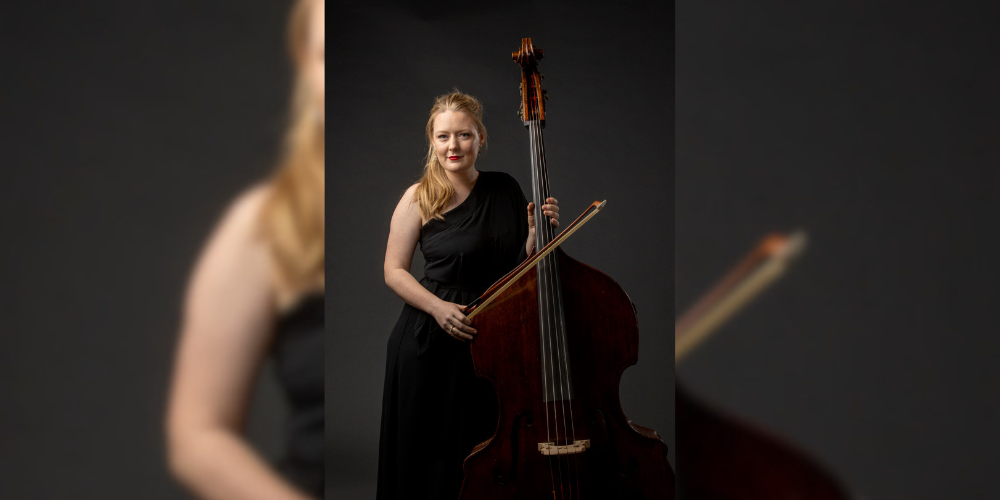
Phoebe Russell, Credit: Sarah Marshall
Develop a tailored approach
Because there’s no one-size-fits-all, effective mentorship adapts to individual needs, personalities and learning styles. For Russell, a great mentor puts personal preference aside in order to tailor the learning experience to the musician: “Every student thrives with a different kind of mentorship – some need a lot more moral support, and others want to have the space to create on their own,” says Russell.
With over 20 years as a member of Faculty at ANAM, Timothy Young also knows how crucial it is to adapt to his students: “Everyone is unique, and so you really need to build their trust so that you can then explore things together,” adds Young.
Nurture the mind and body connection
Not only do Faculty at ANAM recognise that people vary in their skills and temperament, but also in their physicality.
As Rossen recalls from her time at ANAM, “The most meaningful lessons I had were based not just on my skills, but the size of my hands and the way my wrists moved.” Now as an educator, Rossen tries to honour the variances in both physicality and energy with her students: “I always make sure to take the time to listen to students individually and understand where their bodies are at.”
Despite the inherent role of the body in playing music, Young has observed how it is often overlooked when it comes to artistic training, expression, and wellbeing. “In the stress of everything that we do, people forget their bodies,” he says. “But you’re not a brain on a stick – the truth of yourself is actually in your body.”
To foster the mind and body connection with students, Young has found it helpful to share various approaches, including Alexander Technique and Qi Gong, to better observe the body in space. “When you sit down at the piano, the instrument is in front of you so you might entirely forget about the space behind you,” says Young. “These practices help create that awareness.”
"You’re not a brain on a stick – the truth of yourself is actually in your body."
Timothy Young, ANAM Head of Piano
Ultimately, a good mentor doesn’t just help people understand themselves as a performer and musician, but as a human being, with a mind and a body.
Mentor people so they can mentor themselves
Effective mentors ultimately prepare artists to guide, trust, and sustain themselves. As Young further explains, “The craft of mentorship is really about teaching people to teach themselves.”
For Russell, this has been one of the greatest benefits of attending ANAM: “I strongly believe that you are your own greatest teacher,” she says. “When I left ANAM and found myself suddenly going for longer stretches without lessons, I realised it’s all there within you – at the end of the day, it’s you that has to get up on stage and perform, and it’s your own voice, hard work and honesty with yourself and your progress that shapes you.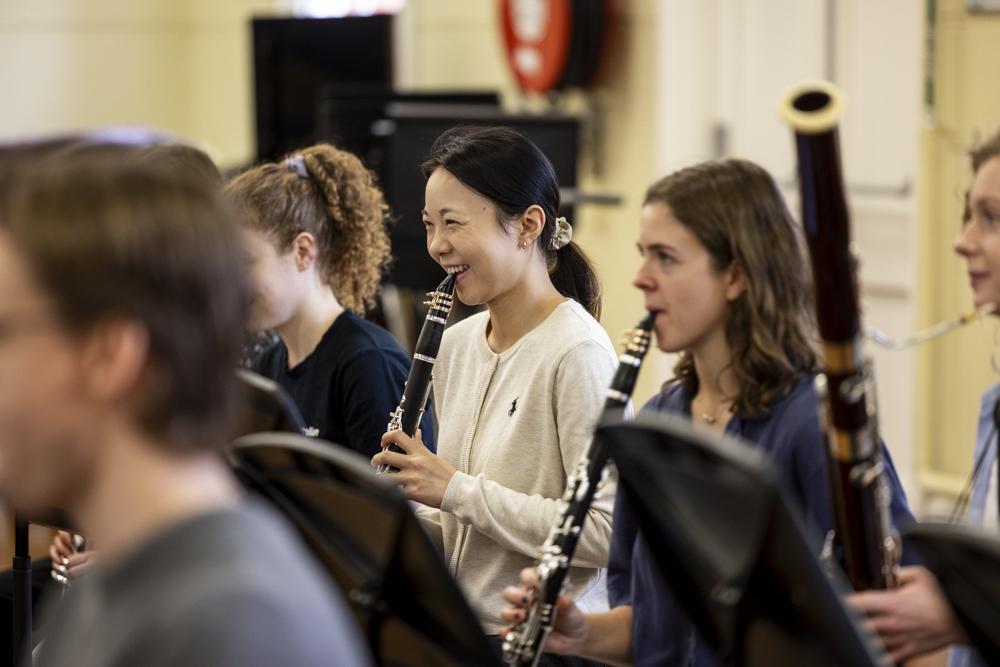
ANAM Musicians in Class, Credit: Pia Johnson
Becoming one’s own best mentor is a fundamental skill because learning is lifelong, asserts Russell. “Now, as Principal Bass of the QSO and a teacher at the Queensland Conservatorium, I’ve realised that learning doesn’t end with a job or position – in fact, it’s just the beginning.”
The same can be said not just for technical skills, but also for life skills gleaned at ANAM and beyond. As a young percussionist Rossen remembers being told by her mentor Eugene Ughetti “Being good at your instrument is the tip of the iceberg”. During her time at ANAM Rossen was taught to think strategically and holistically about being an artist, as she reflects “it really opened my eyes and helped me better understand how to build my career and have a sustainable artistic vision”.
An effective mentor not only guides musicians with their craft but helps them to envision the life they want to lead - and expand the many possibilities within it.
Words by Madeline Dore.
In the next issue of Music Makers, Madeline Dore will speak with current musicians, alumni and faculty about the impact a great mentor can have on a musician’s career.