In Schubert’s song Death and the Maiden a girl marked by death begs Death to release her from the inevitable. She clings to life while Death offers its hand, promising peace. Composed some years later, the string quartet “Death and the Maiden” reprises the song as the theme to a set of variations in the work’s second movement. In this iteration the listener is presented with music that is much more harrowing.
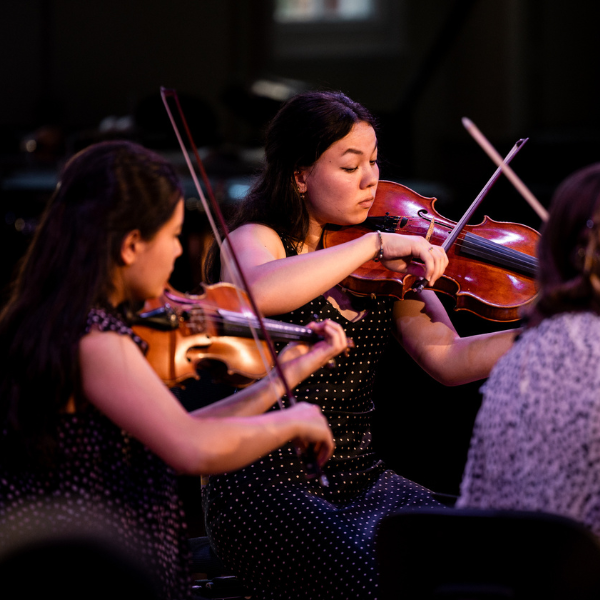
Audiences adore this quartet, time and again they fill concert halls for the arresting experience that it offers. For their part, the performers have been preparing for the encounter with the work and the audience for years. As a starter, they have learned some of the most demanding parts in the repertoire. Then, in order to make their delicate four-piece ensemble sound like the perfect super-instrument, they have tirelessly honed their ensemble skills. The players have spent countless hours fine-tuning their bow-speed, rhythmic accuracy and their sense of groove, and discussing the infinite choices of tempo and timbre. The musical vision directing a small group of instrumentalists to excel in performing a work like this must be beaming with creative power.
All of this needs to be done in an inspired atmosphere, but bringing the true ‘touch of God’ to a performance requires more. It comes from understanding and channelling the musical meaning of the work itself. In case of this quartet, the musicians must live through the multi-movement drama where the variations movement, the work’s dramatic centre, unfolds like a magical dance of the protagonists.
Schubert’s legacy rests with several of the most beloved masterpieces of our literature, not least in his final, Ninth Symphony, in which the ANAM Musicians will be immersing themselves later this year. Their transcendental beauty and their emotional power thrills listeners securing their permanent place in concert programs around the world. But there is more to this music that is important. Schubert’s poets, those whose texts he translated into music, elaborated on issues including forces threatening the elements that sustain life; lovelessness and tyranny; mental anguish and the violence people inflict on each other. These concerns are deep in Schubert’s music and are still with us today.
Death and the Maiden is part of the canon of which we are custodians. At ANAM we study the ways of making this canon live. To accomplish this, we investigate such things as the relationship of Kurtág to Schumann, which the former credits as one of his inspirations, and we scrutinize how Outi Tarkiainen makes a chamber ensemble sound like the icy glory of her native north. We also engage the creative voices of today, those who tell consoling stories in their music as well as those who show us what we have become when we forgot who we could be. The results of our labour come to life in the performances given at ANAM, and beyond, they fill the country’s concert halls wherever our musicians, past and present, make music.
Words by Paavali Jumppanen, Artistic Director.
This article was first published in volume 58 of Music Makers. To recieve articles like this in print, directly to your mail box be sure to sign up to our ANAMates membership program.
Image credit: Charlie Kinross