This March ANAM celebrates the centenary of Hungarian composer György Kurtág with two events at the Rosina Auditorium at Abbotsford Convent: a conversation with ANAM Artistic Director Paavali Jumppanen on 17 March, followed by the concert Kurtág and Friends on 18 March.
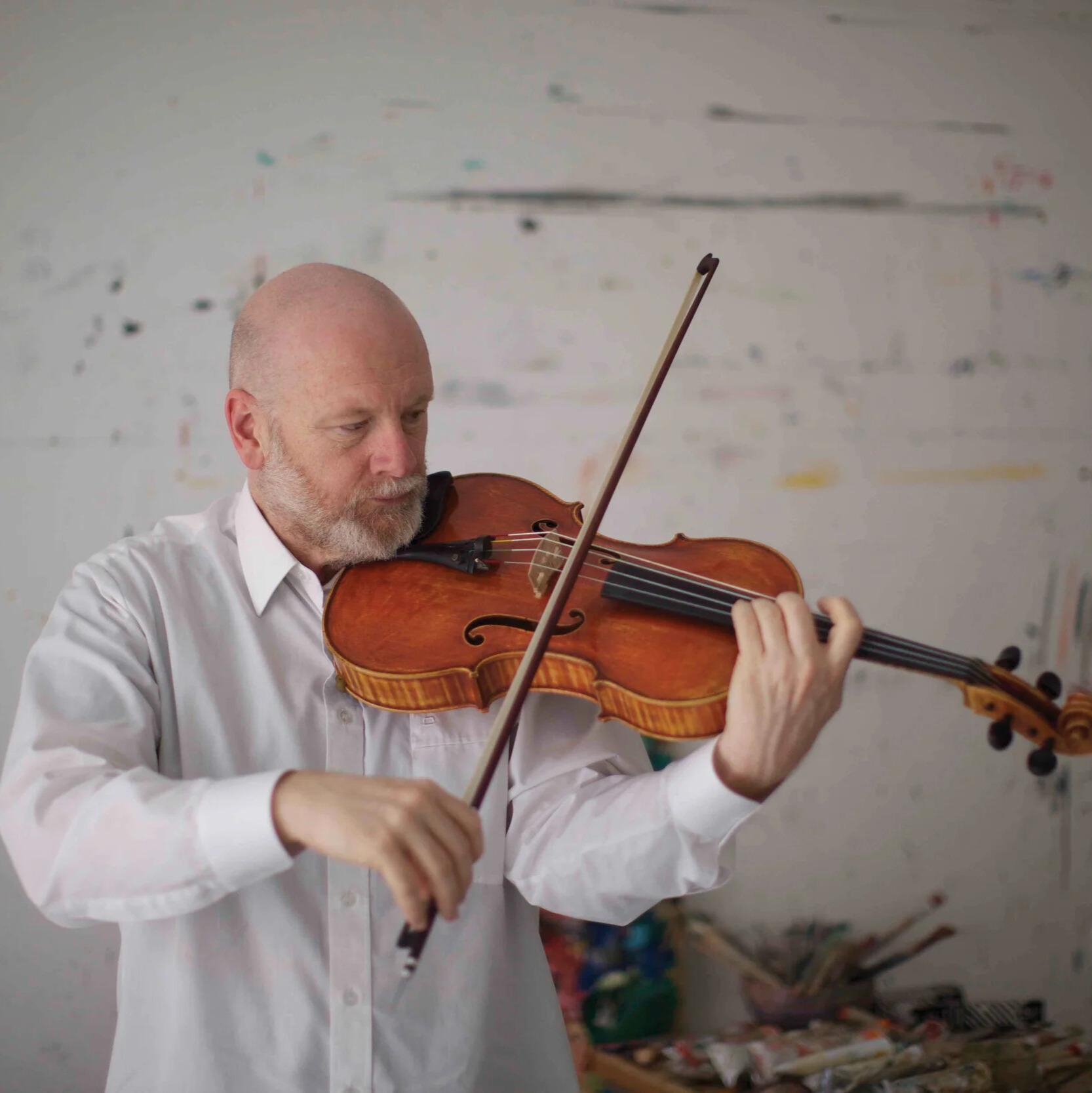
Few musicians in Australia have encountered Kurtág as directly as composer, violist, and former ANAM Artistic Director Brett Dean. After moving to Germany in 1984, Dean spent nearly fifteen years as a violist with the Berlin Philharmonic, during a period when Kurtág was closely connected with the orchestra in Berlin. Dean remembers those encounters as both demanding and formative.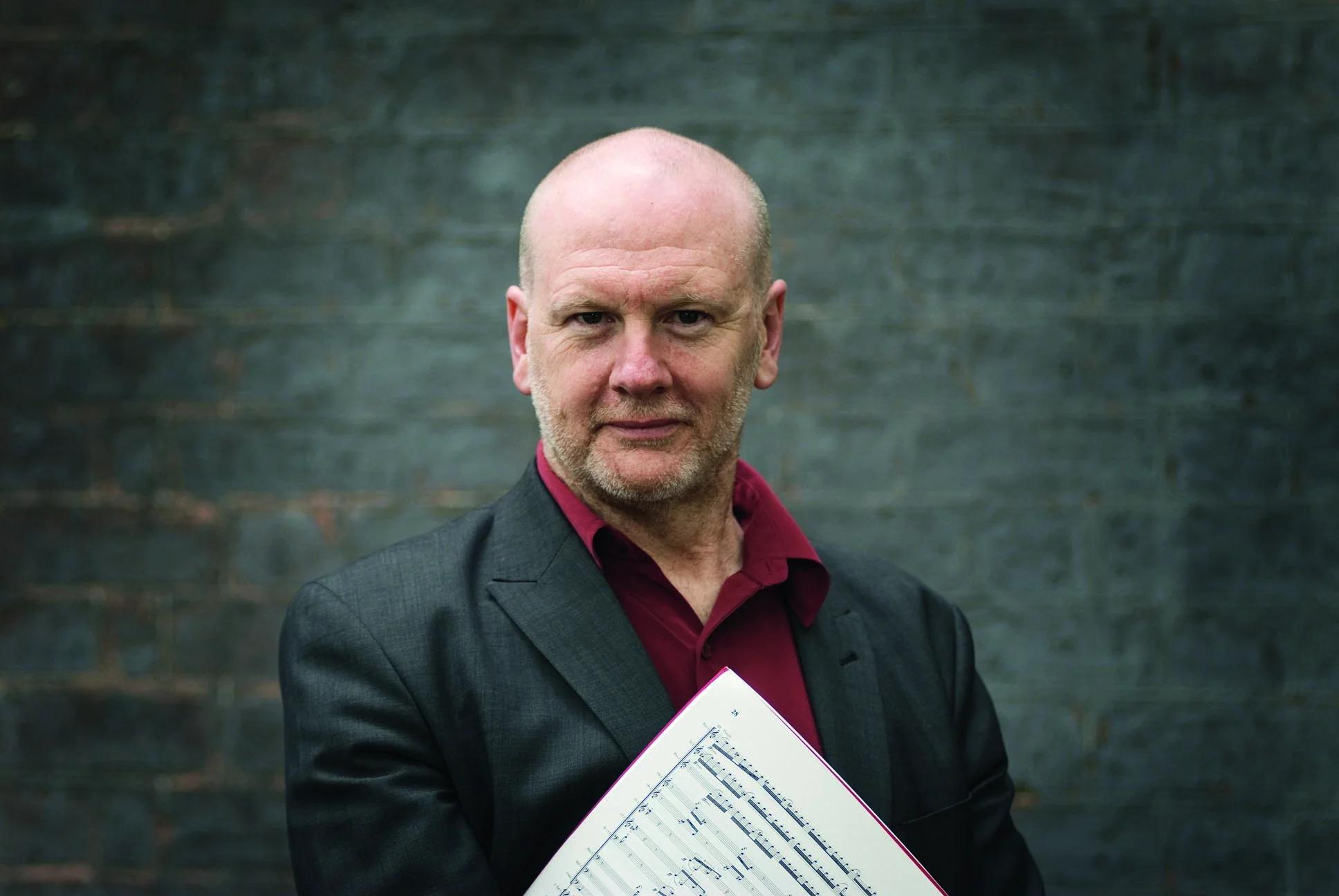
Brett Dean 6235 (photo by Mark Coulsen). Source: Limelight
I first met Kurtág during my Berlin Philharmonic days, when I was still a member of the Scharoun Ensemble. We took part in an open coaching session with him on the nonet reconstruction of Brahms’ Op. 11 Serenade. It must have been around 1991 or 1992. It wasn’t altogether easy. He was extremely exacting in his demands, even unforgiving at times, but the insights were always profound and thought-provoking.
At that stage I didn’t know so much of Kurtág’s music. But as I moved increasingly into composition myself, and by the time he was based in Berlin as Claudio Abbado’s composer in residence at the Philharmonic in the mid-1990s, I had become a huge admirer. Eventually I plucked up the courage to ask him for composition lessons.
“I don’t teach composition,” he told me rather abruptly, before adding: “…but I’ll happily give you a viola lesson.”
So I went along with my Australian pianist friend Philip Mayers and we played Schubert’s Arpeggione Sonata for him.
What transpired was absolutely a composition lesson, merely disguised as a viola coaching. Schubert’s significant role in music history as a genuine “song-symphonist” featured in his comments, which led Kurtág to draw fascinating parallels with Mahler, whose works appeared frequently in Abbado’s Berlin programmes at the time.
From there we moved on to further lessons and coachings, always on the basis that I would play something for him on the viola: his own solo pieces, the string trio movements from his Signs, Games and Messages, which I co-premiered in 1995 with two colleagues from the Berlin Philharmonic, and eventually a session in which I played him my own solo viola piece, Intimate Decisions.
What struck me most was how uncannily Kurtág could put his finger on structural weaknesses. His sense of how and when things unfold in a work’s trajectory, or how they should unfold, stayed with me more than anything else.
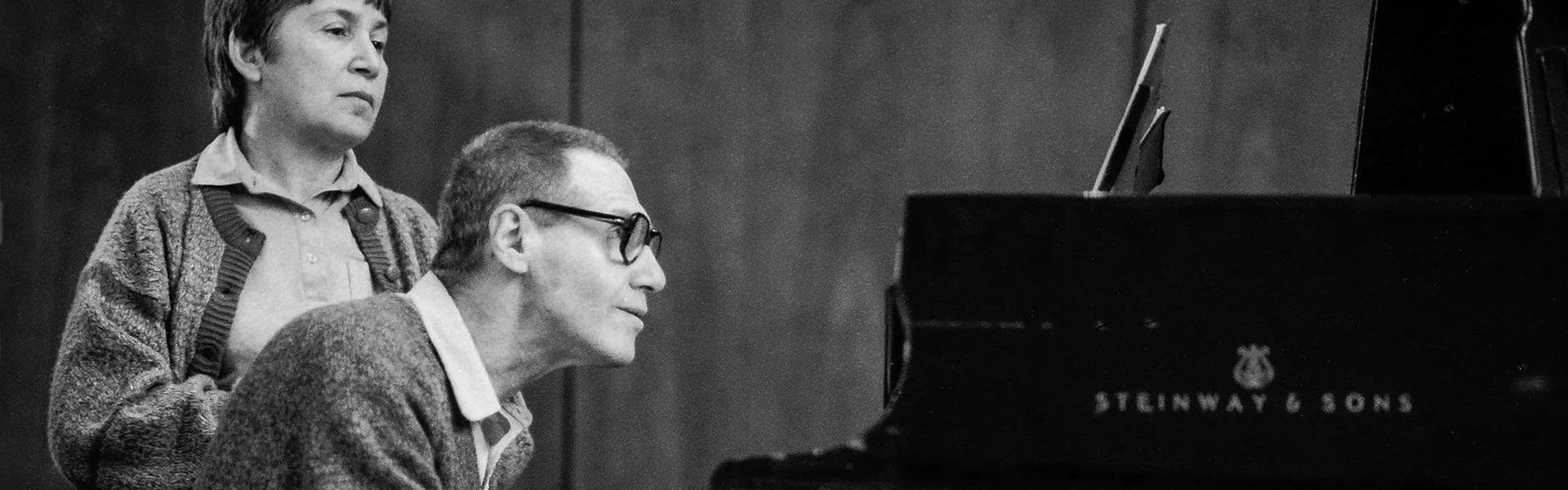 György en Marta Kurtág (photo by Andrea Félvegi). Source: Muziekgebouw.
Despite the tough and demanding exterior, he could also be extremely warm and encouraging. He seemed genuinely to like at least aspects of what I was doing and, in that early phase of putting myself out there as a composer, that meant a great deal.
On a couple of occasions his wife, Márta, sat in on these lessons. She somehow softened him. As I got to know them both better, it became a goal each time to make them laugh.
Words by Brett Dean.
IN CONVERSATION WITH PAAVALI JUMPPANEN: KURTÁG and FRIENDS
Abbotsford Convent, Rosina Auditorium
Tue 17 Mar 2026, 3 pm
Book Now
KURTÁG and FRIENDS
Abbotsford Convent, Rosina Auditorium
Wed 18 Mar 2026, 7 pm
Book Now