Karen Kyriakou
Music and Community Educator, ANAM
ANAM Faculty (2016-present)
My involvement with the ANAM Community Engagement program is always a highlight of the year for me. From the initial training sessions to the first in-school performances, and then to subsequent community programs, the program has grown and changed significantly over time, with ANAM musicians embracing these opportunities and often putting their hands up for more.
One of my favourite experiences each year takes place in the First Years ‘In Schools’ program. During the training sessions, I work with each group to develop the activities that will be presented to primary school students. There are times when the ANAM musicians are, let’s say, “less than impressed” that they must sing during these sessions or that they need to present a body percussion activity by themselves.
But come performance day, something very special happens. These same musicians, when in front of a class of young children, see their whole demeanour transform as genuine connections are made with these young audiences. There are always three or four unexpected ‘naturals’ at presenting to young children, with the musicians’ peers and attending ANAM staff positively enthralled.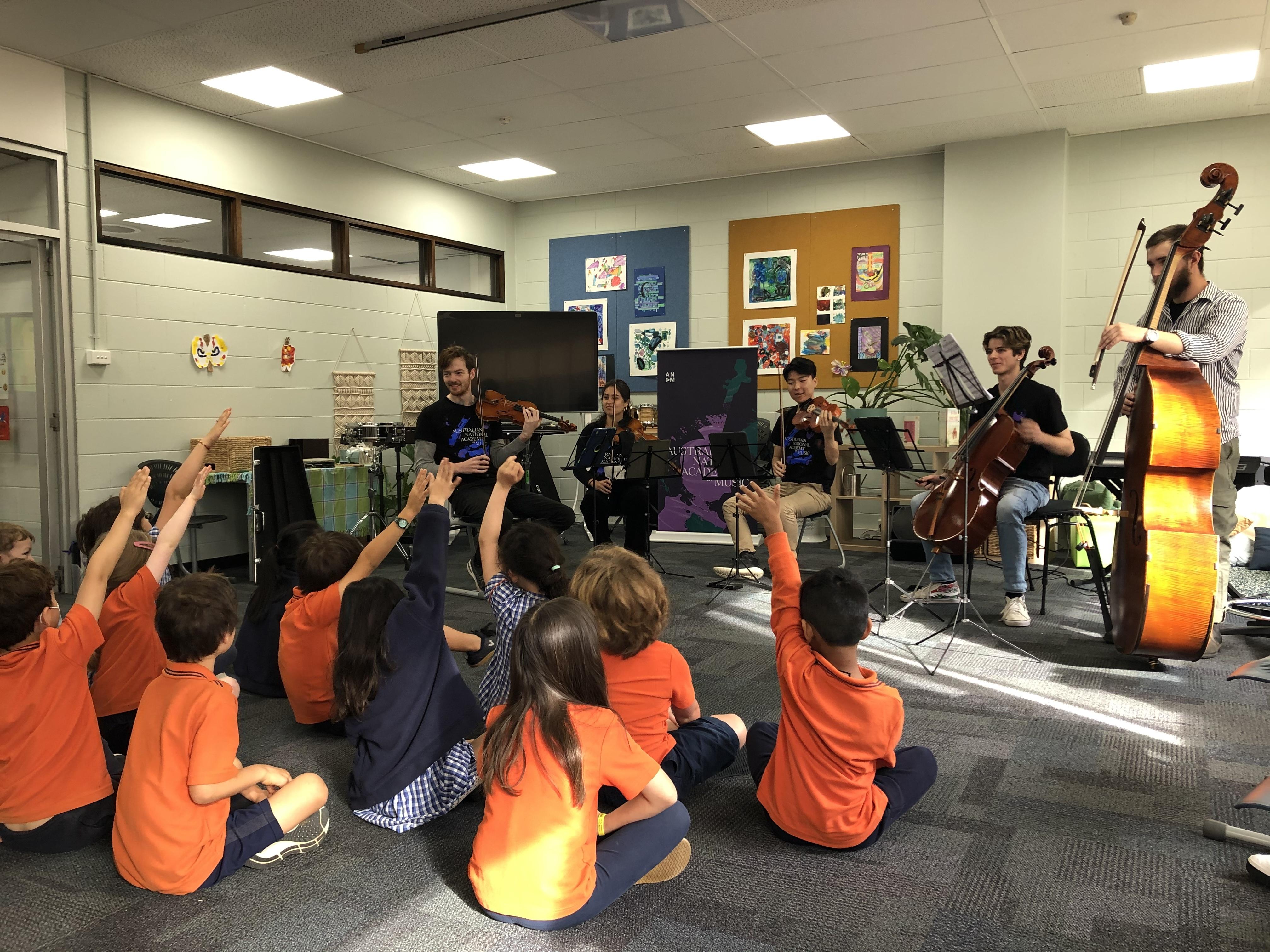
ANAM musicians perform for students at Richmond West Primary School, 2022.
Community engagement in any setting should be mutually beneficial — for participants (the audience) and equally for the performers. Working with musicians to develop activities that inform the way children listen to music is an enormously satisfying role, and the musicians also notice that when the activities they deliver are intentional and thoughtful, students’ responses are enthusiastic and positive.
Reflecting on my first ‘In Schools’ sessions in 2016, the program is now deeply embedded in the culture of ANAM and is seen as one of the many things musicians do as part of their training. The model we use now, although still evolving, relies on different groups of musicians developing their own performances, with accompanying activities, and offering feedback to their peers as they observe other groups performing for students.
The platform of community engagement has become increasingly elevated in recent times, particularly in a world marked by disconnection, mental health challenges, and constant negative news cycles. ANAM’s Engagement program supports musicians in fostering their own skills and identity, while developing a toolbox that promotes wellbeing, inclusion, and positive social change.
As Zoltán Kodály said, “Music belongs to everybody.”
Exposing musicians to diverse audiences in the community allows important connections to be made. Regardless of age or ability, all members of the community deserve access to diverse live music experiences, which of course relies on musicians feeling comfortable performing in these spaces. Those on stage will need to make adaptations; however, it may not be the repertoire that needs to change, but rather the presentation of the repertoire.
By supporting ANAM musicians to build their skills in delivering performances to diverse age groups, ability groups, and cultural groups, we are playing our part in making music — especially Western art music — accessible in ways it has not been before.
Karen Kyriakou headshot by Pia Johnson, ANAM